
Recently, we had a chat with Nur Syafiqah Yaccob, a secondary school teacher from Malaysia who is a part-time doctoral student at the National University of Malaysia. An alumna of the prestigious Fulbright TEA programme, Syafiqah is passionate about developing English teachers’ global competence, students’ global competence through English lessons, and enhancing the quality of teacher professional development programmes. We hope this insightful interview would shed light on the growing field of global competence in Malaysia.
Tell us about yourself and what are you currently doing.

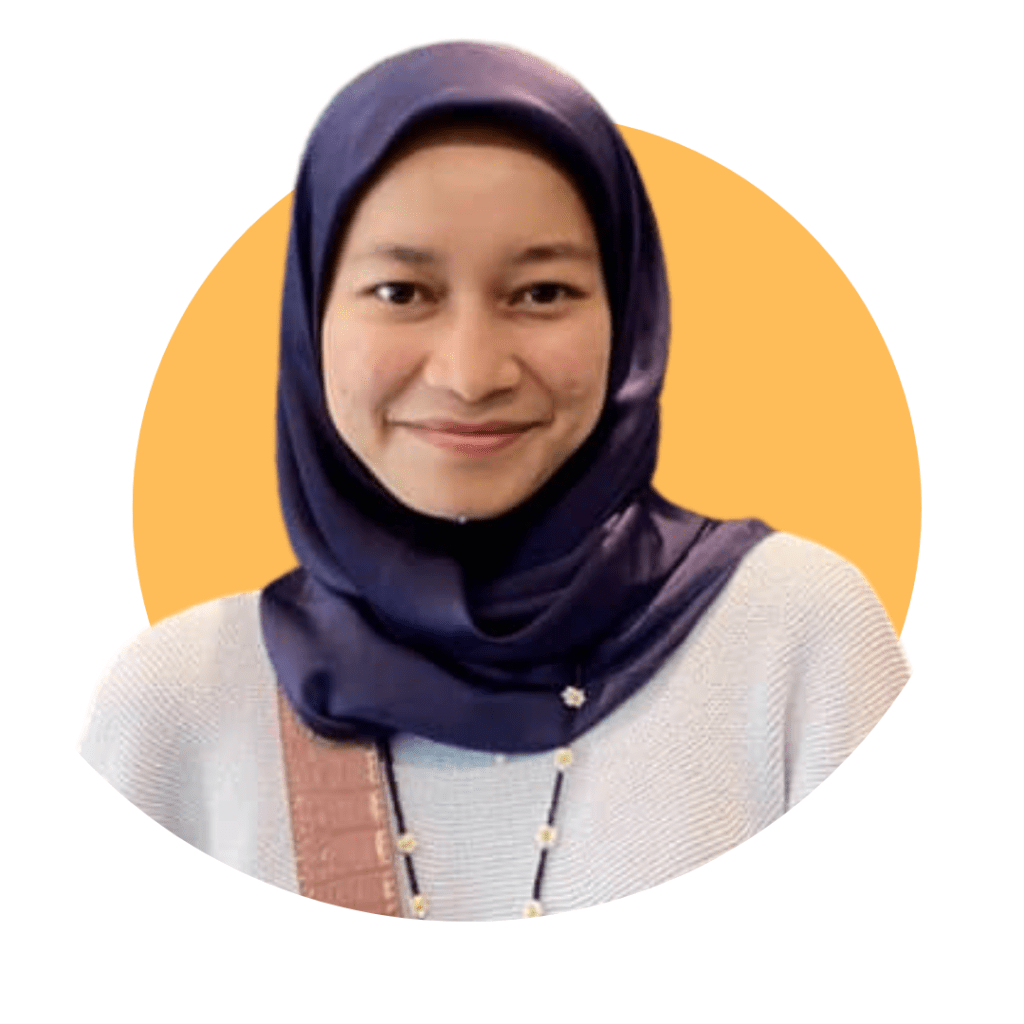
I am currently teaching at SMK Datuk Abdul Rahman Ya’kub in Merlimau, Malacca. I’m pursuing my doctoral study in TESL at UKM (National University Malaysia) but at the moment I am doing an 8-week PhD internship with an Australian university. So, I have two Australian supervisors and two UKM supervisors. Besides that, I was also selected for a U.S. Department program called YSEALI Diversity and Inclusion workshop.
What made you take interest in global competence in the context of ESL?
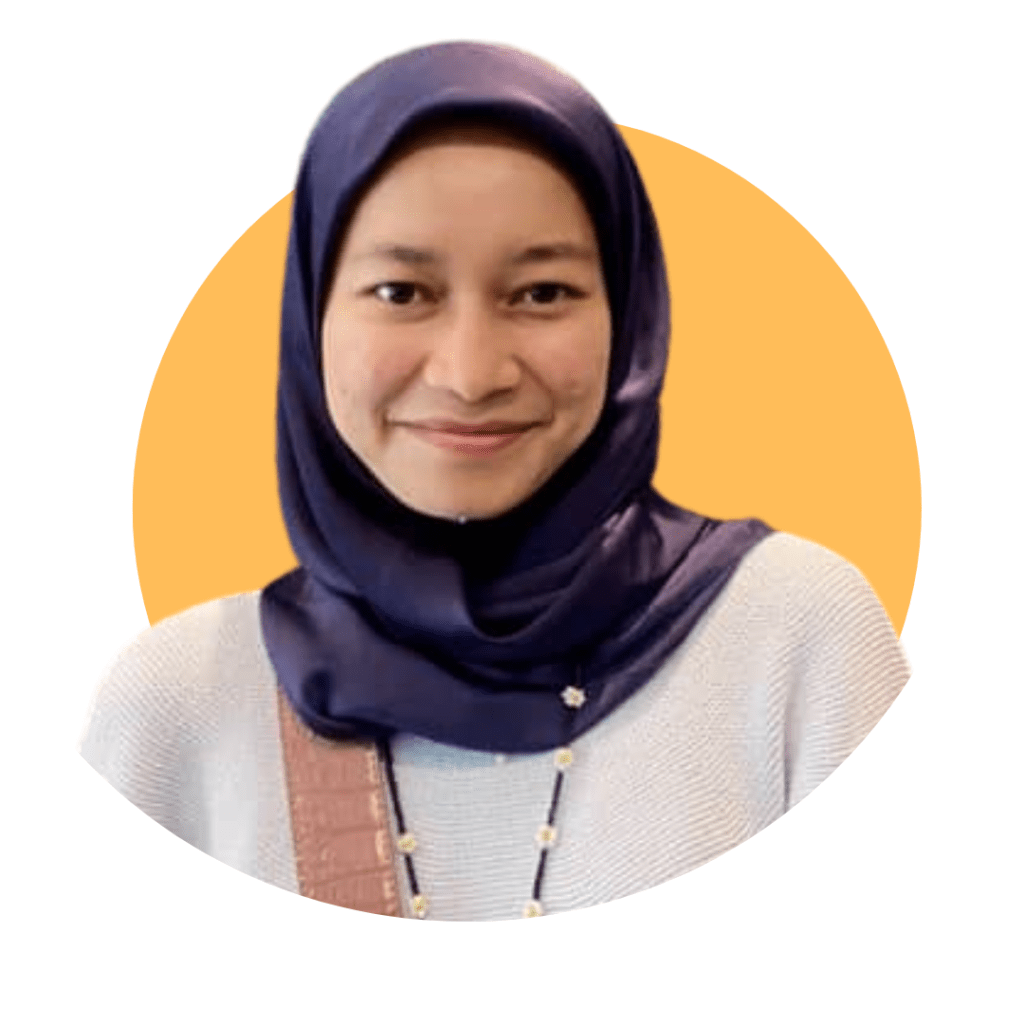
It is a relatively new concept in Malaysia but has been explored in different countries. Parallel with that, there is a lack of studies on this field in Malaysia. There are a few studies on intercultural competence and interculturalism, but not on global competence. So I’m trying to see how we could do more research on global competence in the context of ESL teachers and students. Also, the Sustainable Development Goals and our current state of global education contribute to my interest. Thus, I think global competence is highly related in order for us to achieve quality education.
Personally, it is also because of our CEFR-aligned English textbooks. The majority of the topics are based on Western viewpoints and our local cultures and history are not embedded in the textbook contents. So, these things make me think of how the students are able to know about our own history or life in Malaysia. As a teacher, we need to have global competencies. We have frameworks and models on global competence, including historical perspectives and intercultural collaboration, the knowledge of global and local events and issues, and multicultural understanding. As teachers, we must have all of those elements in ourselves in order to make connections between our local context and the contents of the textbook for the students to understand so that the learning experience would not be isolated for them. In terms of language use, we need to help the students to understand the content by using English effectively because language and cultures are interconnected. Language should be learned together with the culture of that language so that it could be used more meaningfully and effective interaction can be achieved. So, that is the reason why teachers need to have global competence in order to help students achieve it as well because the contents of the textbook might be insufficient. Hence, teachers’ knowledge, skills, dispositions and attitudes should supplement the lack of local content in the textbook.
Teachers who do not have the opportunity to go abroad might not know certain things mentioned in the textbook, so this is where global competence should come in so that they can impart the teaching of that content to the students.
What are the current issues or developments in global competence among Malaysian ESL teachers?
Based on my needs analysis in phase one, 83.1% of teachers said that they have attended programs that have global competence ideas in them. These programs are not systematically structured for developing a teacher’s global competence but maybe the ideas were implicitly indicated during the programs. However, when asked whether they could say that they have the characteristics of globally competent teachers, there was a low level of agreement found but by looking at how they answered the other items on whether or not they agree that global competence is important or not, or whether they do intercultural competence with the students, high level of agreement can be found in those responses. This means they are doing all these global competence-related activities but might not consciously realize that these are the elements of global competence. As a result, they couldn’t say confidently that they are globally competent. This makes me think that we have not given ideas or enough training for the teachers regarding the elements of global competence and this is how they ensure that their lessons and teaching approaches are global competence related.
Other than that, other issues are related to the English skills of our students. This involves the low rate of unemployment, why our students couldn’t use the language more confidently even after long years of knowing the language in schools. This could be because they were not meaningfully used in the classrooms and for teachers to have global competence, they could assist the students to understand that being multilingual is important and they use the language for intercultural collaboration, as well as to appreciate others who have different cultural backgrounds to understand diversity as well as inclusivity. It also acts as a tool to rectify negative stereotypes of other cultures. When they understand all this, they will be able to understand the people that they are talking to and effective communication can be achieved.
I also feel like we focus too much on educational technology. I’m not saying that this is not important but there needs to be more focus on sustainable development on how we can achieve more quality education to compete in global and international stances. On that note, to overcome poverty through education. In certain parts of Malaysia, we still lack facilities so instead of talking about how to use technology, we could look into the root cause of why we couldn’t provide them with those facilities.
Can you tell us more about your PhD research? What does it entail and what inspired you to look into it?
I did design and development research to design and develop a framework. So initially I wanted to do a model but then we could start with a framework first and use the elements or indicators adapted from the framework or models that are already available. It’s from the western viewpoint but my focus is on Malaysian ESL teachers so it is something new and it is quite a challenge to do that as well. It is interesting because I could get a lot of information from other experts and one of the most interesting things is that I was in contact with the professor who created the framework used worldwide – the globally competent teaching framework.
My inspiration would come from my experience using the current secondary school level English textbook and the lack of research on global and intercultural competence. So maybe this is an area where teachers would be interested whenever they read my journals or papers that I have published on global competence and the reason behind the importance of global competence. When I did surveys and questionnaires, I am grateful to have gained enough numbers of participants because they were very supportive of that study and I believe that my survey could give them some ideas on how global competence works.
It is also because a lot of research would be from the Western viewpoints and lack Asian voices in it, so I hope this research can contribute more to that area of study.
Recently you went to Greece to attend a conference. Can you tell us a bit about your experience and what did you gain from it?
I attended this conference in order to overcome my fear of public speaking and train myself to organize my ideas while I speak as well as to prepare for the viva. In the conference, I met with experts to help validate the instruments that I have and I gained some insights from them. One of them was doing intercultural research, one was an expert on qualitative methods and another one was doing more research on Sustainable Development Goals. They were very helpful in giving their insights. At the same time during the conference, I attended several workshops whereby I was able to talk to other people about their research as well. It was very interesting because I learned about the usage of Instagram and its effects on body image. Since it is an interdisciplinary conference, I also listened to some talks on climate change and health. I normally try to avoid participating in interdisciplinary conferences because I prefer education-related ones. But I decided to just have a go at it. In the end, it was an amazing and eye-opening experience for me to be there. Meeting with the experts there inspired me to be like them in the sense that I am open to meeting anyone who is interested in my research.
What do you hope for in the future with regards to teacher global competence, especially among Malaysian ESL teachers.
I hope in the future teachers would have developed their global competence and would have the opportunities to enhance their global competency even more. I also hope that the Ministry of Education can use my research as a guideline for them whenever they design a program for teachers because we really need specific and structured professional development programs that cater to developing teachers’ global competence in Malaysia, especially English teachers. Global competence is broad as it can also be integrated into social studies and other language subjects. It would be great if we have something specific for English teachers and not focusing on technology but going beyond that area such as putting in humanistic approaches or values in our lessons. I also hope to implement the knowledge on global competence from the YSEALI program and provide training to teachers.
We hope the interview will shed more light on the field of global competence in ESL. We would like to take this opportunity to thank Syafiqah for her time and also wishing her the best in her teaching and doctoral studies!
Nur Syafiqah Yaccob has been teaching English in a secondary school in Malaysia for 7 years and has shown interests in the field of ESL, ELT, global competence and technology in lessons. She has various experiences as teacher trainer, speaker, facilitator, proofreader, manuscript reviewer, independent researcher, published author in the area. She previously completed her B.Ed through a twinning programme with a Teacher Trainee Institute and Canterbury Christ Church University, United Kingdom. Her M.Ed was completed at Universiti Kebangsaan Malaysia. She is currently a PhD candidate at the same university and undergoing a virtual PhD internship at Central Queensland University, Australia. She was previously selected for a Fulbright TEA Programme in the University of Arkansas, United States of America. She is passionate about developing English teachers’ global competence, students’ global competence through English lessons, and enhancing the quality of teacher professional development programmes.
 HIVE Educators | Cultivating teacher-scholars