
A famous educator Tony Wagner defined joyful learning as passion, play, and purpose. This indicates that learning is not only purposeful but is able to generate a sense of pleasure without feeling burdened towards learning. However, some educators tend to pass over pupils’ thoughts and feeling in their teaching and thus result in ineffective teaching and learning processes.
To find out what does joyful learning mean to our pupils, I have conducted a short survey with 10 pupils in my school and the findings are worth to share with educators.
Theme 1 : Interactive Learning
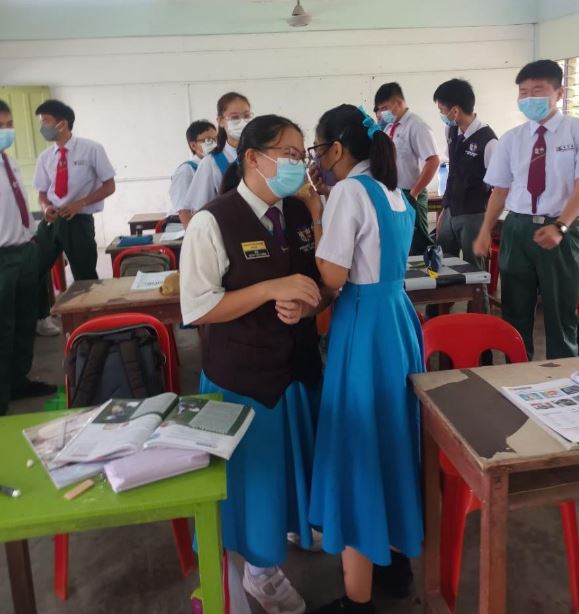
50% of the respondents (5 respondents) mentioned that interactive learning is one of the key elements for joyful learning.
- “Learning is happy when teachers talk to pupils happily and pupils can talk to teachers also”- Pupil E
- “I think face to face in the classroom is more happy, because we talk together”- Pupil F
- “Teacher teach me, ask me question , and I answer”- Pupil G
- “For me, I think teachers should interact with pupils properly”- Pupil H
- “Good interaction between teachers and pupils can create joyful learning”- Pupil J.
Based on pupils’ responses, it is clearly shown that pupils enjoy interactive learning. Conventional chalk-and-talk teaching is no longer a suitable teaching approach. In fact, interactive teaching enables pupils to play their active role as they are able to ask questions, answer the questions, exchanging ideas and give opinions. Interactive teaching also enables pupils to develop a good relationship with their teachers and this helps to create intrinsic motivation among pupils in learning.
Theme 2: Gamification in Learning
40% (4 respondents) pointed out that they enjoy the lesson when games are implemented in their learning.
- When I am learning, I can play some games. – Pupil A
- We can play puzzle, Kahoot, word search.- Pupil B
- If teacher can let us play some games, we will feel very happy- Pupil D
- Little games, like puzzle can make me very happy. Pupil E
Gamification in learning is proved to bring a lot of benefits in pupils’ learning. Compared to answering questions on their workbooks, exercise books and papers, pupils tend to be more attracted to the fun of playing games. When pupils feel fun, their stress towards learning can be minimised and thus encouraging joyful learning. Victoria (2020) also pointed out that pupils tend to have a more positive attitude towards learning when they are being less stressed.
Theme 3: Peer Learning
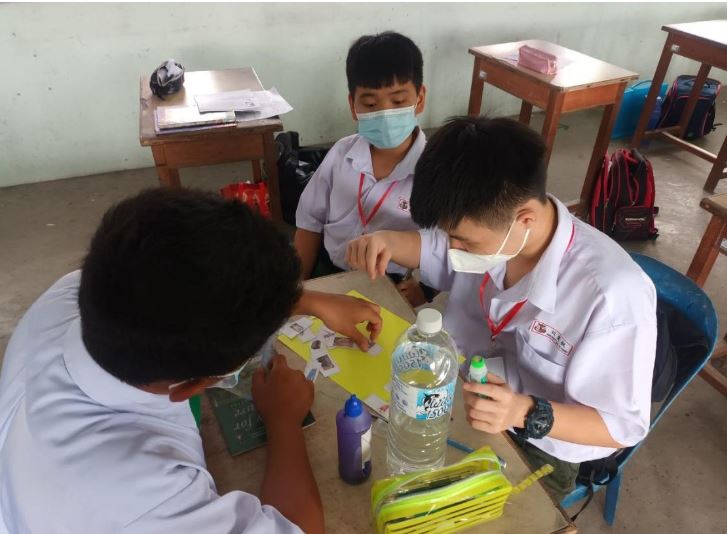
40% (4 respondents) mentioned that they enjoy doing group work with their friends and this promotes joyful learning.
- I like to do group work with friends, we help each other.- Pupil C
- Discuss with friend because can teach each other. – Pupil D
- For happier learning, I will do group study with my friends. – Pupil F
- I hope teacher can give more group assignments, because through group work, we can discuss and learn from each other. We will not feel burden. – Pupil I
Peer learning create a stress-free learning environment for the pupils and thus they are able to enjoy the learning process. Compare to teachers who are always viewed as more powerful and autocratic, pupils tend to have a more enjoyable learning moment when they are involved in peer learning and teaching. When they are doing group work, they are given a chance to collaborate with their friends, and they feel more comfortable to discuss with their friends on the topic given. Sometimes, it can be observed in the classroom that, instead of asking questions to teachers, pupils tend to ask their friends for clarification. Rajeev (2017) also pointed out that peer teaching promotes joyful learning because it creates a sense of freedom from teachers among pupils.
Theme 4: Homework- The Killer of Joyful Learning
40% (4 respondents) pointed out that if they are given less homework, learning will be much more enjoyable. One of the respondents even mentioned that homework has killed the fun of learning.
- Teacher gives us too many homework, and it is very burden. – Pupil D
- I hope teacher can give little homework.- Pupil E
- Homework kills the fun of learning, there are too much homework that we need to do, from morning to night- Pupil H
- I will feel happy if teacher can reduce the homework, do not ask us to copy a lot of things, can we print out, and not copy? We do not learn from copying. Pupil J
“No homework means joyful learning in class”, this is an attempt of movement introduced by Central Board of Secondary Education (CBSE) of India (Boruah, 2010) and pupils are rejoicing of it. To most of the pupils, homework is like a burden, they are aware of the benefits of homework, but still, it does not mean that they like it. As an educator, we should put ourselves in pupils’ shoes too. Giving a lot of homework does not ensure a teaching and process goes smoothly. We should think of the rationale of giving the homework. Do the pupils really need to do that much in a day? Does the homework help them? I agree with Pupil J that copying does not really help a lot in their learning. We should be selective in giving homework, reduce the homework given and do not let homework kills the joy of learning.
Theme 5: Visual Aids
20% (2 respondents) mentioned that visual aids such as videos and pictures promote joyful learning.
- a. I like watching videos posted by teachers. – Pupil C
- b. Pictures help me understand.- Pupil D
Studies have shown that visual aids help pupils in their learning. Shabiralyani et al. (2015) states that pupils are able to comprehend a lesson easier with the help of visual aids such as pictures, models, charts, maps and videos. Colourful pictures and videos grab pupils’ attention easily. They will not feel bored if teachers are able to implement some visual aids in their lesson.
Joyful learning plays important roles in engaging pupils’ learning process and it helps pupils in their learning. Sometimes, it is important for educators to make a pause and listen to their voices and needs. I believe a joyful lesson not only facilitates the teaching and learning process but it also creates a sense of accomplishment among the educators.
References
Boruah, Maitreyee.(2010, Sept.13).No Homework Means Joyful Learning in Class. DNA India, www.dnaindia.com/academy/interview-no-homework-means-joyful-learning-in-class-1437163.
Rajeev Ranjan. (2017, Dec.21). Peer Teaching –Importance and Benefits – Effective Technique for Promoting Joyful Learning. School Education, www.rajeevelt.com/peer-teaching-importance-benefits-joyful-learning-educationist/rajeev-ranjan.
Shabiralyani, G., Hasan, K.S., Hamad, N.,& Iqbal, N. (2015). Impact of Visual Aids in Enhancing the Learning Process Case Research: District Dera Ghazi Khan. Journal of Education and Practice 6(19):226-233.
Victoria. (2020, Nov. 4).11 Benefits to Playing Games in the Classroom. http://www.teachstarter.com/au/blog/10-benefits-to-playing-games-in-the-classroom.
Written by Ting Suk Hua

Ting Suk Hua is a Master Teacher for the English subject. Currently based in SMK Tong Hua, Bintangor, she is always keen to know how to engage pupils in the classroom through different types of teaching activities. As an English teacher, she knows she plays an important role in motivating pupils to fall in love with English
 HIVE Educators | Cultivating teacher-scholars