DEVELOPMENT
Education is always seen as a contributing factors of development especially human capital development and varieties of other development i.e economic, environmental and political of the countries. Globalisation itself is neither good nor bad. It has the power to do enormous good. But in much of the world it has not brought comparable benefits. For many, it seems closer to an unmitigated disaster (Stiglitz, 2002).This caused the people across the nations started to realize that trends of economic development are not sustainable anymore. Therefore, there is an urgent need to ensure all individuals enjoy sustained peace, prosperity and quality of life.
WHAT IS MEANT BY SUSTAINABLE DEVELOPMENT
According to United Nations Development Programme (UNDP) (2022), sustainable development refers to achieving a balance between environmental care and fulfilling human needs for now and in the future. In 2015, 17 Sustainable Development Goals (SDGs) were launched at the United Nations (UN) General Assembly. These SDGs are intended to be achieved by 2030 under the UN Resolution “2030 Agenda”, and Malaysia is one of the 93 countries that have pledged to undertake this agenda. The 17 SDGs are shown below:

Source: UN (2015)
EDUCATION FOR SUSTAINABLE DEVELOPMENT (ESD) APPLICATION IN MALAYSIA
Education for Sustainable Development (ESD) is the use of education as a tool to achieve sustainability. The knowledge, skills, attitudes and values are necessary to shape the future in a more sustainable way. United Nations Educational, Scientific and Cultural Organization (UNESCO) presents ESD as a development project with four objectives and four thrusts. The objectives are to
- i) facilitate networking, linkages, exchange and interaction among stakeholders in ESD
- ii) foster an increased quality of teaching and learning in education for sustainable development
- iii) help countries make progress towards and attain the Millennium Development Goals through ESD efforts
- iv) provide countries with new opportunities to incorporate ESD into education reform efforts while the four thrusts of ESD are improving access to quality basic education, reorienting existing education programmes, developing public understanding and awareness and providing training.
To achieve SDGs through education especially in Malaysia in the first place is through sustainability learning and thinking. This can be seen through pre school to tertiary level of education which it plays a vital role in instilling in individual itself. ESD is implemented via its two blueprints-Malaysian Education Blueprint which consists of preschool to secondary level and Malaysian Higher Education Blueprint which includes tertiary level. In Malaysia preschool level, children as young as 5-6 years old are exposed to fundamental idea of sustainability as part of their curriculum standard. They also will be involved in environmental sustainability activities such as planting plants around their school grounds and also in their school compound (Balamurali, 2021). In primary school level, the students have been taught subjects such as Science and Design and Technology which introduce them to the concept of sustainability not only theoretically but also to develop their psychomotor skills. The students practice the 3R concept (Recycle, Reduce and Reuse) by applying this concept in their projects.
In secondary education level, ESD subject like Fundamental of Sustainability being offered to upper secondary levels i.e Form 4 and Form 5 students which pursuing Science, Technology, Engineering and Mathematics (STEM) while in tertiary education level ESD play a critical role in developing proper values, behaviors and characters in their students toward sustainability. This can be seen by each undergraduate programmes offered in Higher Education Institutes where the students have to possess the appropriate knowledge, skills and values towards sustainability.
CONCLUSION
Eventhough environment dimension is given much emphasis, other sustainable development goals such as gender equality, sustainable economic actions, reducing poverty and other critical areas is seems lack in the curriculum. Therefore, all relevant parties must cooperate and developing the ESD curriculum so that other sustainable goals dimension also take into account. This to create more balance in terms of environment, people and economic dimension in future.
REFERENCES
1. Joseph,E.Stiglitz.(2002). Globalization And Its Discontinents.W.W Norton & Company,Inc.:New York.
2.United Nations.The UN Sustainable Development Goals.United Nations,New York, 2015.Available at (accessed on 8 November 2022):http://www.un.org/sustainabledevelopment/summit/.
3.Balamuralitahara Balakrishanan. (2021).Achieving SDG 2030 via Education:Is Malaysia Ready?.Available at (accessed on 8 November 2022):https://stratsea.com/achieving-sdg-2030-via-education/
Written by Logeswaran Tanga vello
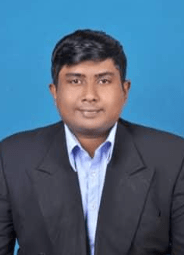
Logeswaran Tanga vello is currently a PhD student in Universiti Kebangsaan Malaysia (UKM) under Fakulti Sains Sosial & Kemanusiaan. His field of research is Geography, focusing on tourism geography and environment.
 HIVE Educators | Cultivating teacher-scholars