
Magic Bottle is a language game that incorporates the use of game, reading aloud, repetition, music and role playing in teaching pronunciation. Action research had been done using ‘Magic Bottle and it had won the Silver Award in 2022 International Action Research Competition organized by Universiti Teknologi Malaysia, Johor.
This action research was carried out on 27 Form 1 students and it consisted of 2 cycles. None of them had passed the first PBD Speaking Skills Assessment before the research. However, students had shown significant improvement after the use of ‘Magic Bottle’.
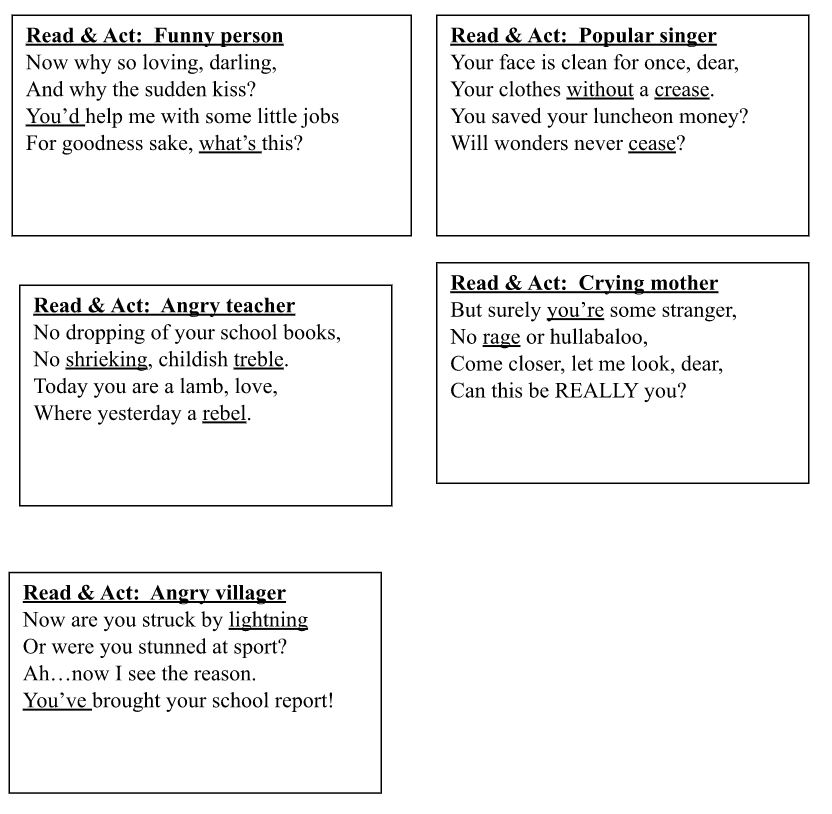
Before the research, students were taught using read aloud technique the words that were tested in the research. Students then played the language game ‘Magic Bottle’. As they sat in a circle, they passed the ‘Magic Bottle’ around with the music on. The teacher then stopped the music. The student who was holding the ‘Magic Bottle’ took out a piece of paper from the bottle. That student then had to read and act out the sentence in the paper. The game was continued until all the papers in the bottle were acted out by students. The sentences used were taken from Pulse 2 Unit 1 Page 14. The words tested in this research were underlined.

The first cycle of action research shows that although ‘Magic Bottle’ had aroused students’ interest towards learning of pronunciation, students’ pronunciation for some of the words were unclear.
For the next cycle of action research, teacher used stanzas from the poem ‘Newsbreak’. Teacher had made sure all the students read the sentences clearly while acting. Students had to read the sentences again if they did not pronounce the words clearly. The same process of game was repeated until all the sentences were read out by the students.
In the post test, all the students were asked to read the same words again like the words in the pre-test. The difference between pre-test and post-test was measured using T-Test.
Findings and Discussions
Before the action research, students were extremely quiet every time during speaking lesson as they were afraid of making mistakes. Nobody would volunteer to present in front of the class. However, students were more confident to take part in speaking activities after the use of ‘Magic Bottle’. They were also more daring to voice out their opinions during brainstorming activities in class. Furthermore, they were eager to take part in public speaking activities such as presentations during assembly and speaking at Speaker Corner.
From the interview conducted at the end of the research, majority of the students voiced out that they enjoyed playing the game. All of them said that they are looking forward for games such as ‘Magic Bottle’ in their future lesson.
The Paired-T test conducted for the difference between pre-test and post-test results shows that students had improved significantly in their pronunciation. Finally, students’ mid-year PBD Assesssment Report for Speaking Skills shows 89% of the students managed to pass their PBD Speaking Skills Assessment.
Conclusion
In conclusion, the use of ‘Magic Bottle’ had successfully helped the students to improve their pronunciation in terms of articulation of the words. This is because ‘Magic Bottle’ is a strategy that incorporates crucial pronunciation learning activities (reading aloud and repetition) and the element of fun (music, games and role-playing)(Boonkita (2010, Krashen, 1982, Morley, 1991, Wibawa, 2014 and Kayl, 2006).
‘Magic Bottle’ is an innovation for language teaching and learning that can help to improve students’ pronunciation. Apart from teaching pronunciation, ‘Magic Bottle’ also can be used for the teaching of other language items or even other subjects that involve memorization of difficult concepts and words.
Reference List
Boonkita, K. (2010). Enhancing the Development of Speaking Skills for Non-Native Speakers of English. Journal
of Social and Behavioural Sciences. Kamonpan Boonkit / Procedia Social and Behavioral Sciences 2 .1305-
1309
Kayl, R. (2006) Teaching Speaking: Activities to Promote Speaking in A Second Language. The Internet TESL
Journal. http://unr.edu/homepage/hayriyek (last retrieved on: 5 December 2022).
Krashen, S.D. (1982). Principles and Practice in Second Language Acquisition. England: Pergamon
Press Ltd.
Morley, J. (1991). The Pronunciation Component in Teaching English to Speakers of Other Languages: TESOL
Quarterly, n. 25(1), 51-74.
Wibawa, Y K, (2014). Improving Students’ Pronunciation Through Role Plays for Class VII At SMP N 3 Tempel
in The Academic Year of 2013/2014. Yogyakarta: English Language Department, Faculty of Languages
and Arts, Yogyakarta State University.
Written by Shirley Ling

I am an English teacher with 18 years of teaching experience in the secondary school. I graduated with Master of Education (TESL) in 2004 and I am an active writer of OSEM Educational Platform. Currently, I am also taking part actively in International Educational Platforms as I am a Wakelet Ambassador and Kahoot Ambassador for Malaysia. I am also a graduate of Akademi Youtuber Malaysia and have been producing more than 200 youtube videos for English teaching and
learning. Find out more about me at my Youtube channel and Facebook link. Come, follow me!
Youtube Channel: https://www.youtube.com/@ShirleyLingJen
Facebook: https://www.facebook.com/shirley.jen.5/
 HIVE Educators | Cultivating teacher-scholars