
Introduction
Writing has always been a difficult task for students as they often lack of ideas on what to write. According to Mukundanetal et. al. (2013), “Second language writing has always presented serious difficulties for language learners”. To add on, writing is one of the main skills tested in Malaysian English syllabus (DSKP Bahasa Inggeris Tingkatan 3 KSSM Semakan, 2006). In English PT3 essay writing, students are tested in terms of content, communicative achievement, organisation and language.
In order to solve this problem, a student-centred approach, ‘Pair-Think-Write-Share (PTWS)’ was invented in this research. It is a technique that encourages students to learn writing through working with their friends.
This study was guided by two objectives. First, it aims to improve students’ writing skills through working together with their friends. Besides, it also aims to increase students’ PBD writing performance. This is because PBD is an important assessment for students nowadays.
Although writing together or collaborative writing has long existed, it is seldom practised in our country (Supyan Hussin et. Al, 2003 and Jen, S., 2008). Many teachers do not trust their students to learn on their own as they feel that most of them are not competent enough.
Research Participants
This research was carried out on 30 weak Form 3 students. Only 2 out of 30 students scored Band 3 in their PBD Writing Skills. All the students failed the pre-test in this research. They scored below 10 marks in the Notes Expansion essay. The total mark for notes expansion essay is 20 marks. In this research, the weak students were paired up with good proficiency students with the hope that the good proficiency students would assist the weak students in their writing tasks.
Data Collection Method
Four research methods were used in this study to triangulate the data from the findings: Analysis of past documents, a set of pre-test and post-test, questionnaire and semi-structured interview. “At least 3 methods were used in a research to triangulate and validate the data collected (Johnson and Turner, 2003).
Research Procedures
First of all, analysis of the students’ mid-year PBD was done to find the suitable students for this study. Students who performed poorly in the mid-year assessment were chosen in this study. Students were then asked to sit for pre-test before the treatment. After the treatment, they were asked to sit for post-test. The difference between the pre-test and post-test results were compared using T-test to see whether there was any significant difference after the use of PTWS (Pair-Think-Write-Share) technique. Finally, students’ responses were also gathered through the use of questionnaire and semi-structured interview.
PTWS (Pair-Think-Write-Share) technique consists of 3 main stages as below.
Stage 1: Writing Together
Students’ Previous Knowledge
Students have been taught about notes expansion essay
Rationale/Objectives
To enable students to learn from each other.
To develop writing skills.
Procedure
- Students are given essay topic.
- Students work with their pairs.
- Students are given explanation about the writing task.
- Students brainstorm with their partners the content for the essay.
- Students write the essay in pairs.

Stage 2: Peer Editing
Students’ Previous Knowledge
Students have been taught about notes expansion essay.
Students are taught about the common mistakes in essay writing.
Rationale/Objectives
To enable students to teach and learn from each other.
To enable students to discuss the mistakes they have made in their essay.
To improve the students’ essay
Procedure
1. Students are shown examples of common mistakes that they have made in their writing such as the use of subject-verb agreement and tenses.
2. Students are also shown ways to make their essays more interesting.
3. Students discuss the essay they have completed in the first stage with the same partner.
4. Students look through their essay and make some improvements on it based on what have
been taught by the teacher.
5. Students get together for a final reading.

Stage 3: Peer Reviewing
Students’ Previous Knowledge
Students are taught about the common mistakes in essay writing.
Students are able to give comments on other students’ writing.
Rationale / Objectives
To enable students to check on each other’s composition.
To provide the audience for students’ essay.
Procedure
1. Students exchange their essays with their friends.
2. Students are shown example on how to review each other’s work by giving them a
set of criteria to look at in the essay.
3. Students give comments for their friends’ essay.
4. Teacher evaluates the comments and grades the students’ essays.
5. Teacher returns the essays to the students for correction.

Findings and Discussion
The results of this study were gathered through a set of pre-test and post-test and students’ perceptions about the use of Pair-Write-Think-Share (PWTS) technique were gathered through questionnaire and semi-structured interview.
Comparison of Pre-Test and Post Test
| Num | Student | Pre-Test | Post-Test | Difference |
| 1 | ZULHILMIE | 3 | 10 | 7 |
| 2 | SHIRELY | 4 | 11 | 7 |
| 3 | JING EN | 4 | 10 | 6 |
| 4 | ADRIANA | 3 | 11 | 8 |
| 5 | FARRAH | 0 | 8 | 8 |
| 6 | ILHAN | 4 | 11 | 7 |
| 7 | KASYFUL | 3 | 11 | 8 |
| 8 | MAHALECUMY | 6 | 11 | 5 |
| 9 | KHALID | 4 | 11 | 7 |
| 10 | CHONG KAI YING | 8 | 11 | 3 |
| 11 | WONG KIN YU | 3 | 11 | 8 |
| 12 | DURGES | 4 | 12 | 8 |
| 13 | TERRY | 5 | 12 | 7 |
| 14 | PUTERI | 3 | 10 | 7 |
| 15 | VENN | 5 | 12 | 7 |
| 16 | LOH CHUN HERNG | 3 | 8 | 5 |
| 17 | HARUNAKISHI | 2 | 6 | 4 |
| 18 | VEDHASHENI | 4 | 9 | 5 |
| 19 | HARIZ | 4 | 9 | 5 |
| 20 | AMAN SHAH | 4 | 10 | 6 |
| 21 | SITI NUR ANIYAH | 3 | 9 | 6 |
| 22 | KU JIA XUAN | 2 | 9 | 7 |
| 23 | LEE JUN HAO | 3 | 8 | 5 |
| 24 | CHAN WEI ER | 4 | 10 | 6 |
| 25 | BATRISYIA | 4 | 13 | 9 |
| 26 | LUQMANUL | 4 | 11 | 7 |
| 27 | AIMAN | 3 | 8 | 5 |
| 28 | TAI CHEN XUN | 5 | 10 | 5 |
| 29 | WONG JIA HAO | 2 | 8 | 6 |
| 30 | YONG YAN YU | 2 | 7 | 5 |
It was noticed that in the pre-test, all the students scored below 10 marks for notes expansion essay. The total mark for notes expansion essay is 20 marks. However, all of them had shown improvement in their post-test results. 19 out of 30 students (63.33%) scored 10 marks and above in their post-test. This shows that the use of Pair-Think-Write-Share (PTWS) Technique had improved their writing performance. Apart from getting ideas through working together with their friends, they had also learnt to improve their grammar and spelling.

Figure 1.1: Paired T-Test to Compare The Difference Between Pre-Test and Post-Test
The paired T-Test conducted for the differences between the pre-test and post-test shows that there was a significant difference between the pre-test and post-test results. This shows that students had improved significantly in the post-test test compared to their pre-test.
Findings from Questionnaires
Students’ perceptions about the use of Pair-Think-Write-Share (PTWS) were gathered through questionnaire and semi-structured interviews. Below are the findings from questionnaire and semi-structured interview. Both the questionnaire and semi-structured interviews were adapted from Jen (2008).
A. Benefits of Pair-Think-Write-Share (PTWS)
SD- Strongly Disagree
D- Disagree
NS-Not Sure
A- Agree
SA-Strongly Agree
| No. | Statement | SD | D | NS | A | SA |
| 1. | PTWS helps to improve my | |||||
| Content | 3 | 17 | ||||
| Communicative Achievement | 10 | 10 | ||||
| Organisation | 2 | 5 | 15 | |||
| Language | 3 | 5 | 10 | |||
| Other: | ||||||
| 2. | Content | |||||
| I include all the points for the essay while working with my friend. | 2 | 17 | 11 | |||
| I can think of relevant information to put in my writing. | 9 | 10 | 11 | |||
| I can provide enough information for my writing. | 1 | 6 | 15 | 8 | ||
| Other | 2 | 5 | 11 | 12 | ||
| 3. | Communicative Achievement | |||||
| I write using appropriate conventions while working with my friend. | 1 | 2 | 18 | 9 | ||
| I write using appropriate tense. | 9 | 11 | 10 | |||
| I write using appropriate format. | 2 | 6 | 15 | 7 | ||
| Other | 2 | 5 | 10 | 13 | ||
| 4. | Organisation | |||||
| I learn to link my ideas using appropriate sentence connectors. | 5 | 10 | 15 | |||
| I learn new connectors from my friend. | 5 | 5 | 20 | |||
| I learn to organise my ideas logically. | 8 | 7 | 15 | |||
| I learn to divide my content into different paragraphs. | 2 | 10 | 18 | |||
| Other | ||||||
| 5. | Language | |||||
| I learn new words from my friend while writing together. | 7 | 23 | ||||
| I learn to use a variety of sentences. | 20 | 10 | ||||
| I learn spelling of words. | 12 | 18 | ||||
| I learn about grammatical errors while writing together. | 5 | 10 | 15 | |||
| Other: |
- Perceptions on Pair-Think-Write-Share (PTWS)
| No. | Statement | SD | D | NS | A | SA |
| 1. | I can write better if I work alone. | 18 | 10 | 2 | ||
| 2. | I enjoy getting ideas from my friend. | 3 | 27 | |||
| 3. | Writing together helps me to write better essay. | 6 | 24 | |||
| 4. | Writing together wastes my time. | 15 | 10 | 5 | ||
| 5. | I know more about my friend while writing together. | 5 | 25 | |||
| 6. | I enjoy writing my essay together with my friend. | 4 | 26 | |||
| 7. | I dislike writing together with my friend. | 10 | 10 | 10 | ||
| 8. | Writing together with my friend helps me to know about my mistakes. | 4 | 26 | |||
| 9. | I can improve my English while writing together with my friend. | 5 | 25 | |||
| 10. | I hope to have more chance to write essay together with my friend. | 4 | 26 |
Findings from Interview
Part A: Benefits of Pair-Think-Write-Share (PTWS)
| Q 1 | What have you learnt while discussing and writing your essay together? |
| Response(s) | New words, content, different ideas |
| Q 2 | What have you learnt while editing your essay together? |
| Response(s) | Grammar mistakes, tenses |
| Q 3 | What have you learnt while reviewing your friend’s essay? |
| Response(s) | New words, content, new ideas |
Part B: Perceptions on Pair-Think-Write-Share (PTWS)
| Q 1 | Do you enjoy writing together with your friends? Would you rather write with your friend or alone? |
| Response(s) | All the students prefer to write with their friends. |
| Q 2 | What are the problems you face when writing alone? |
| Response(s) | No idea what to write. |
| Q 3 | What are the problems you face when writing together with your friends? |
| Response(s) | No problem |
| Q 4 | Do you prefer to write essay alone or with your friends? |
| Response(s) | Write essay together with friends. |
| Q 5 | What are the benefits of Pair-Think-Write-Share (PTWS)? |
| Response(s) | Help to improve me essay writing. I learn more new words and vocabulary. |
| Q 6 | What are the disadvantages of Pair-Think-Write-Share (PTWS)? |
| Response(s) | Class is noisy because students are having discussion. |
Both the questionnaire and semi-structured interview show that all the students gave favourable responses towards the use of Pair-Think-Write-Share (PTWS) technique. They prefer to write together with their friends and are looking forward for this kind of activity again in the future. The only limitation of Pair-Think-Write-Share (PTWS) is class was a bit noisy as students were involved in discussions with their friends.
Conclusion
In conclusion, Pair-Think-Write-Share (PTWS) approach is suitable for teaching writing as it involves students to write together through activities such as brainstorming, discussion, peer editing and peer reviewing. According to Reid and Power (1993), writing together does not only increase the students’ interpersonal skills and self-confidence but it can also improve their writing performance (David and Ling, 1993). When writing together, students not only learn about linguistic aspects of the language but they also learn how to use the language for effective communication. According to Bruffee (1999), writing together also plays a positive role in influencing the intellectual growth of students. This is because through collaborative writing activities such as peer critique and peer review, students learn to examine, evaluate, verify, analyse, weigh alternatives and consider consequences as ideas develop.
Pair-Think-Write-Share (PTWS) technique is not only suitable in writing English essays but also it can also be used for other types of writing such as writing science report, history project and so on. This is because it employs students-centred approach which is crucial for students learning.
Acknowledgement
I would like to express my deepest gratitude to my Master of Education (TESL) supervisor, Professor Masputeriah Bt. Hamzah for her ideas and guidance in this project.
References
Bruffee, K.A. (1999). Collaborative Learning. Higher Education, Interdependence, and the Authority of Knowledge. Baltimore, MD: John Hopkins University Press.
David, B.H. and Ling, C.Y. (1993). Long-Distance Collaboration with On-line Conferencing. TESOL Journal. 2(4):28-31.
Dokumen Standard Kurikulum dan Pentaksiran Tingkatan 3 (2018). Kementerian Pendidikan Malaysia. 37.
Jen, S.L. (2008). Using Collaborative Writing to Develop Students’ Writing Skills. Universiti Teknologi Malaysia.
Johnson, B. and Turner, L.A. (2003). Data Collection Strategies in Mixed Methods Research.
Handbook of Mixed Methods in Social and Behaviour Research, 297-319.
Mukundanetal, J. (2013). Malaysian Secondary School Students’ ESL 3.Writing Performance in an Intensive English Program. World Applied Science Journal 22 (12): 1667-1684.
Reid, J. and Powers, J. (1993). Extending the Benefits of Small-Group Collaboration to the ESL Writer. TESOL Journal. 2(4): 25-40.
Supyan Husin, Nooreiny Maarof and J.V.D. Cruz (2003). Sustaining An Interest in Learning English and Increasing The motivation to Learn English: An Enrichment Programme. The Millenium MICELT 2000. 3rd Malaysian International Conference for English Language Teaching. 15-17 May 2000. Malaysia: Universiti Putra Malaysia: 1.
This innovation had won the Gold Award in the Teaching and Learning Innovation Competition (TLIC 2023) organised in Sumatra, Indonesia. In this research, the teacher invented a teaching approach to improve Malaysian students’ writing performance.
Written by Shirley Ling Jen
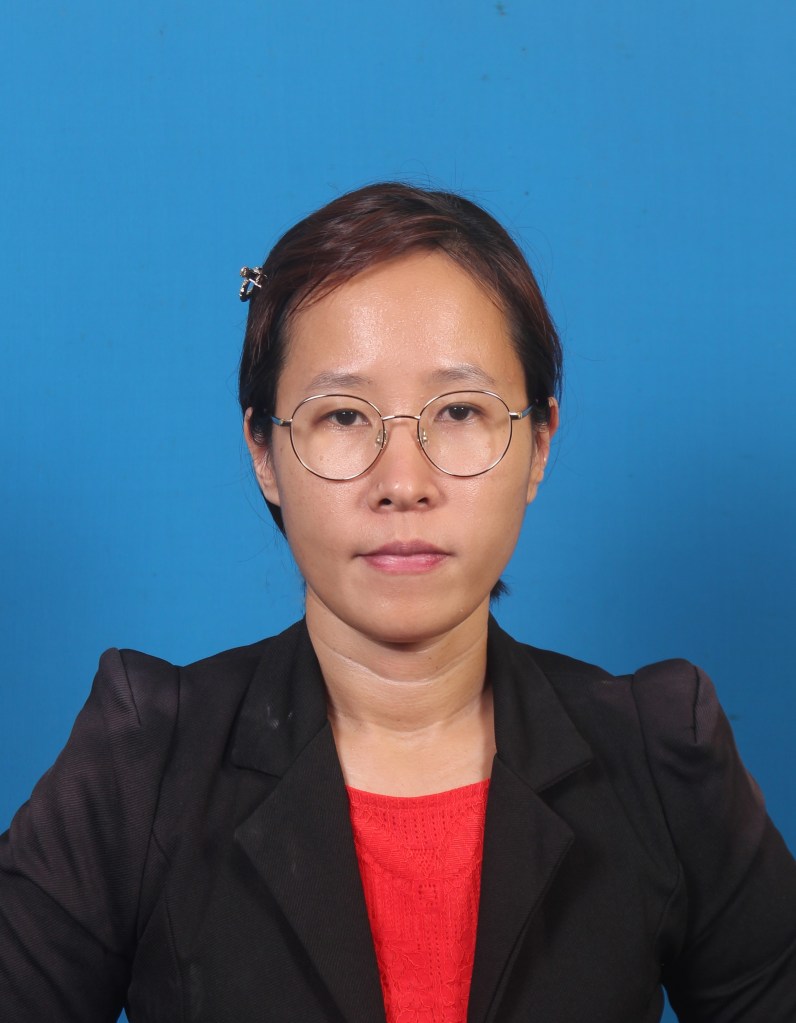
I am an English teacher with 18 years of teaching experience in secondary
school. I graduated with a Master of Education (TESL) in 2004 and I am an active writer of OSEM Educational Platform. Currently, I am participating actively in International Innovation Competitions. I have won 2 Silver Awards and 1 Gold Award in innovation competitions. I am also the judge for International Innovation Competitions such as GYIIF, IYSA, MIICA and I3C. Furthermore, I am a member of Akademi Youtuber Malaysia, Guru Adiwira Digital (GADJET) and Cikgootube for Johor State. I have produced more than 200 youtube educational videos for English teaching and learning. Find out more about me at my Youtube channel and Facebook link. Come, follow me!
Youtube Channel: https://www.youtube.com/@ShirleyLingJen
Facebook: https://www.facebook.com/shirley.jen.5/
 HIVE Educators | Cultivating teacher-scholars