
Have you ever experienced that when you want to try out a new recipe, you would go to Youtube and watch a video to learn how to cook it? Of course the person who demonstrates the cooking happens to be an expert, or at least somewhat good at cooking so all the steps are so smooth and quick you can’t even catch up to his/her speed. What you would do is to just pause the video, give yourself a moment to digest the information and when you’re ready, you resume the video. What you’re experiencing is called the self-paced learning. It’s a way of learning that let you go at your own speed and in turn you will have enough time to achieve mastery of the subject.
Most online courses are adopting self-paced learning. It’s especially beneficial for working adults who would want to upskill themselves. Most of these courses do not impose a completion deadline. You can take as long as you want to complete the course. However, in a classroom (or in a school) setting, students are required to pass up schoolwork, assignments, projects and etc. by a certain due date. Not to forget a typical education system would require the students to go through some kind of assessment, particularly summative assessments (mid-term exam, final exam etc.). There is no way students can take their own sweet time to complete works given to them, or take the tests only when they are ready. This will become even more detrimental when there is a little to no supervision on their learning.
In a flipped classroom, the study materials e.g. textbook pages to be read, recorded videos of the lesson etc. are given to the students to be learnt at home and they would need to complete the ‘homework’ or tasks at the school. By doing this, the teacher will become more of a facilitator to guide students in the classroom. The downside of this teaching approach is how do you make sure the students are really studying at home? How do you address the questions students are having while they are studying the materials at home? The lack of motivation and immediate feedback becomes the next issue to be addressed.
An in-class flip is similar to a flipped classroom. The difference is that in an in-class flip, the teaching and learning materials are brought into the classroom. The students will study the materials by their own while the teacher go around and guide them. You will still have control over your students’ learning but at the same time they still have a fair amount of autonomy over their own learning.
Here is a breakdown of how I implement self-paced learning and in-class flip in my Year 10 Chemistry topic – Stoichiometry.
Stoichiometry covers a wide range of chemical calculations learners need to master. Break it down into several subtopics, you can even break each subtopic into smaller bite-sized parts. This is how I break it into many parts:
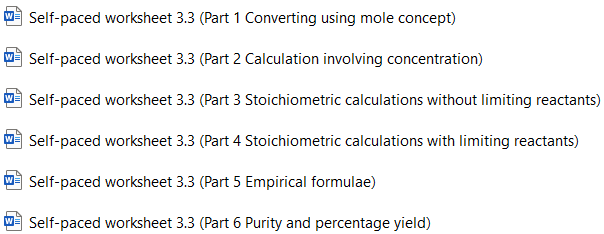
- Determine the parts of the topic you want to have and create the worksheets for each part.
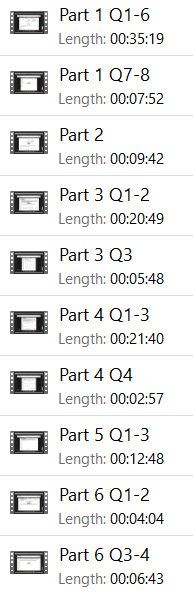
- Create videos for each part. Video must be as short as possible. You can break the part into more than one videos if it is too long for a one full length video. The person who gives the lessons in these videos would be me, and not videos taken from third party websites.
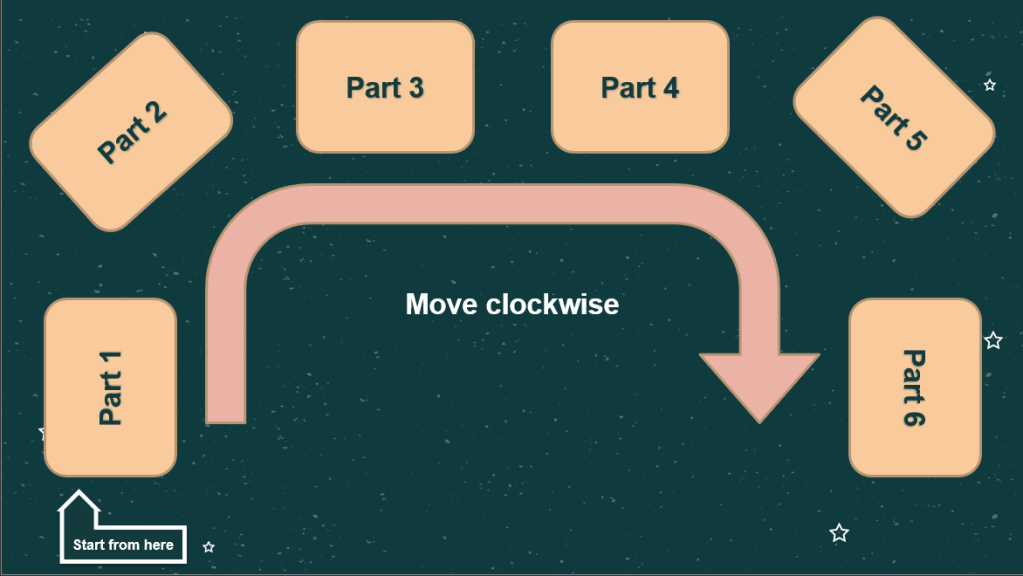
- Set up stations for each part. Students will gather at each station when they are completing each part of the topic. At each station, students will have access to electronic devices to watch the videos. They can also collaborate with each other to solve the questions in the worksheet since students gathered at each station should be on the same pace.
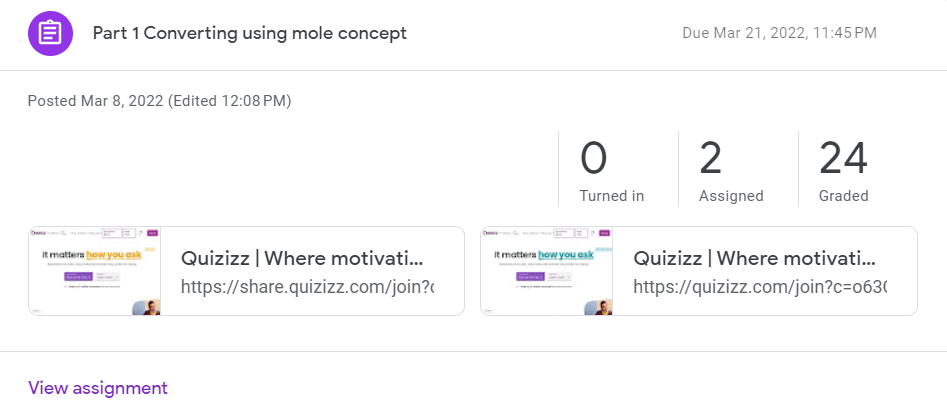
- To show that they have mastered each part at each station, make sure they complete a short quiz before they move on to the next station. They have to accomplish at least 90% accuracy of the quiz before they can proceed. For the quiz, I use Quizizz. You can assign the quiz in Quizizz and link it to Google Classroom.
- Give a deadline for each part that the students must complete e.g. 1 day one part. The students must submit all of the self-paced worksheets by the end of the topic. You can use a visible tracker to display their progress.
- The teacher’s role is to facilitate and guide students who need help while they are doing the self-paced learning in the classroom. For students that have completed all the parts and quizzes, you can assign them a leadership role and help the rest of the students.
- For an overall topic mastery, the students have to complete a formative assessment. A test papers combining all the parts will be given to the students.
On the contrary to a traditional classroom, students would become insecure towards this new learning approach. There will be pushbacks from the students, the parents or even the school administrators. You don’t need to implement it in all of the lessons. Start with the topic which you find most difficult for the students to master. This approach is a way of differentiated learning after all and it could cater to student’s learning needs.
References
Farah, K. (2021, April 24). How to create a self-paced classroom. Cult of Pedagogy. Retrieved March 12, 2023, from https://www.cultofpedagogy.com/self-paced-how-to/
Gonzalez, J. (2014, March 24). Modifying the flipped classroom: The “in-class” version. Edutopia. Retrieved March 12, 2023, from https://www.edutopia.org/blog/flipped-classroom-in-class-version-jennifer-gonzalez
Written by Keele Chin

Keele Chin is a science teacher at Axcel International School, Puchong, Selangor. His pedagogical approaches include active learning using various teaching and learning strategies and methods, questioning techniques, technological and web-based learning tools, experiential learning, and timely assessment as and for learning.
 HIVE Educators | Cultivating teacher-scholars