
One of the most widely used frameworks for building communities online is the Community of Inquiry (CoI) theoretical framework developed by Garrison, Anderson, and Archer (2000). The Community of Inquiry is grounded within Dewey’s (1938) philosophical belief of practical inquiry and community. According to Swan, Garrison, and Richardson (2009), the term “community” in educational research is often used to refer to the cognitive and emotional connections established between physically separated learners. Researchers such as Wang, Laffey and Poole (2001) and Rovai (2000) share similar views that the term community especially ones created online can result in shared knowledge, availability of a support system, commitment to group goals and most importantly a sense of belonging in terms of cooperation and satisfaction among group members.
The literature on online learning environments advocates that interaction between learners is key to student success (Richardson, Maeda, Lv & Caskurlu, 2017). Garrison et.al (2000), proposed that the three core dimensions embedded within their framework -cognitive presence, social presence and teaching presence can be used to create meaningful educational experience. These presences are interdependent (shown in Figure 1) and based on the assumption that effective online learning is largely hinged on the development of the community (Swan, Garrison, and Richardson, 2009). To date, while the framework has been vastly used in different online learning contexts, researchers have suggested additions to its original framework in regards to the presences, dimensions, and influences (Kozan & Caskurlu, 2018; Peacock & Cowan, 2016). Although the three presences in the Community of Inquiry (CoI) framework are multi-dimensional, it is crucial to understand how they function individually before comprehending their roles collectively.
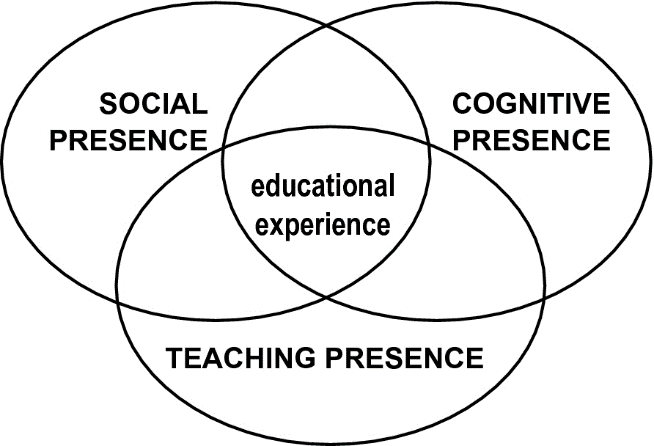
Figure 1: The Community of Inquiry (CoI)
Cognitive Presence
The ability to construct and confirm meaning through continuous reflection (Anderson, Rourke, Garrison & Archer, 2001), form the core of the cognitive presence in the Community of Inquiry (CoI) framework. Within this presence which was largely constructed though the Practical Inquiry Model (PIM) also created by Garrison et al. (2000), there are four phases in which meaning is construed. These phases include (1) triggering event, where an issue is identified for further inquiry; (2) exploration, where the individual learner explores the issue; (3) integration, where learners conceptualize meanings based on the ideas explored in the second phase and (4) resolution, where learners apply the new skills and knowledge gained from the preceding phases into real-life context (s) (Garrison et. al, 2000). The fundamental process that must occur in for learners to be able to fully master the cognitive presence is sustainable reflection as postulated by Redmond (2014).
Social Presence.
Lowenthal and Lowenthal (2010), define social presence as a concept that explains the nature of people to present themselves as ‘real people’ through a communication platform. In further extending that concept, Garrison (2017), expounded that within the context of the CoI, social presence is the creation of an environment that supports and encourages analytical questions, misconceptions, and the contribution of ideas. The three categories of the social presence indicators which are (1) emotional (affective) expression, in which learners share personal expressions and values; (2) open communication, where learners develop aspects of mutual awareness and recognition; and (3) group cohesion, where learners build and sustain a sense of group belonging (Garrison et.al., 2000). The function of social presence is to foster a sense of belonging that supports an environment in which learners can openly communicate with each other to address different viewpoints and establish mutual understandings.
Teaching Presence
Teaching presence as described by Garrison et al, (2000), is the design, facilitation and direction of both the cognitive and social processes that support learning. The three main components within this presence include (1) instructional design and organization; (2) facilitating discourse and (3) direct instruction. Design refers to the learning content and teaching approaches while organization is defined as any modifications made for the change in design. Facilitation empowers and encourages personal thinking established through shared understanding while the function of direct instruction is to identify and clarify misconceptions and misunderstanding in addition to providing feedback (Garrison, 2017).
In having individually described the functions of three presences within the Community of Inquiry (CoI) model, Garrison et. al., (2000), argued that the level of critical inquiry required to achieve cognition needs to be supported by social presence while materials, teaching approaches and learning activities that facilitate knowledge construction must be enhanced through teaching presence. Thus, emphasizing on the importance of the amalgamation of the three presences within the Community of Inquiry (CoI) framework for meaningful educational experiences online. The Community of Inquiry (CoI) framework has since been utilized as the basis of numerous studies exploring student’s blended learning experiences in which its three presences provide a tool to measure the effectiveness of the blended learning processes (Fiock, 2020; Zhang, 2020).
In view of its widely accepted use, the Community of Inquiry (CoI) framework has over the years been extended and revised in the hopes for better outcomes in online educational research and practice (Kozan & Carskulu, 2018). Some of these revisions were made based on the assumption that the framework may not cover all essential aspects of successful online learning experiences (Stenbom, Jansson, & Hulkko, 2016; Sun & Chen, 2016). In a more recent and comprehensive review of the Community of Inquiry (CoI) framework, Kozan and Carskulu (2018), identified four new presence types suggested by earlier research. These are autonomy presence, learning presence, emotional presence, and instructor social presence. These presences according to the authors are aimed at constructing “purport to bridge a theoretical gap from certain perspectives” (Koza & Carskulu, 2018, p:9) to continually enhance the theoretical insights into the use of the Community of Inquiry (CoI) framework.
References
Anderson, T., Rourke, L., Garrison, D. R., & Archer, W. (2001). Assessing teaching presence in a computer conference context. Journal of Asynchronous Learning Networks, 5(2).
Fiock, H. (2020). Designing a community of inquiry in online courses. International Review of Research in Open and Distributed Learning 21(1), 136-153
Garrison, D. R., Anderson, T., & Archer, W. (2000). Critical inquiry in a text-based environment: Computer conferencing in higher education. The Internet and Higher Education, 2(2-3), 87-105.
Kozan, K., & Caskurlu, S. (2018). On the Nth presence for the community of inquiry framework. Computers & Education, 122, 104-118.
Lowenthal, D. A., & Lowenthal, P. R. (2010, April). A mixed methods examination of instructor social presence in accelerated online courses. Paper presented at the annual meeting of the American Educational Research Association, Denver, CO.
Redmond, P. (2014). Reflection as an indicator of cognitive presence. E-Learning and Digital Media, 11(1), 46-58.
Richardson, J. C., Maeda, Y., Lv, J., & Caskurlu, S. (2017). Social presence in relation to students’ satisfaction and learning in the online environment: A meta-analysis. Computers in Human Behavior, 71, 402-417.
Rovai, A. (2002). Sense of community, perceived cognitive learning, and persistence in asynchronous learning networks. The Internet and Higher Education, 5(4), 319-322.
Stenbom, S., Jansson, M., & Hulkko, A. (2016). Revising the community of inquiry framework for the analysis of one-to-one online learning relationships. The International Review of Research in Open and Distributed Learning, 17(3), 36-53
Written by Shubasihini Suppiah

Shubashini Suppiah is a teacher educator at the Institute of Teacher Education Gaya Campus in Kota Kinabalu, Sabah Malaysia. Her areas of research interests are teacher education and teacher professional development, reflective practice approaches and digital literacy in the ESL classroom.
 HIVE Educators | Cultivating teacher-scholars