It is commendable to see that our leaders see the need for secondary school students to be educated about systems of governance and democracy. This is clearly demonstrated by a suggestion from one of Malaysia’s Members of Parliament. This particular MP suggested that education about democracy must focus on significant elements of the Federal Constitution in addition to the fundamentals of elections. He also stated that the curriculum ought to cover civics and how a constitutional monarchy operates. In addition, he suggested that the education ministry emulate one of Malaysia’s activist’s approaches to educating university students – which is through live streaming on Instagram and TikTok.
These proposals hold significance within the context of political education. While nations like the United Kingdom and Australia have established discrete subjects dedicated to democracy and governance, wholesale adoption of foreign educational policies without local contextualization poses potential pitfalls. This is not to negate the possibility of introducing political education to our students; indeed, Malaysia’s Ministry of Education issued a manual in 2019 outlining the instruction of civic and citizenship values, which extends to a segment addressing democracy and political parties in the secondary school curriculum.
Since civic and citizenship education in our education context is not being taught explicitly and not as a stand-alone subject, there is a possibility that such noble suggestions from our leaders will face some sort of hiccups when attempting to implement them into our teaching context. Firstly, the pressing academic demands on secondary students, particularly those preparing for the Sijil Pelajaran Malaysia (SPM) examination, introduce a delicate balance when introducing a ‘democracy module’ for Form 4 and Form 5 students. The practical execution warrants meticulous consideration: Can it be seamlessly integrated without disrupting the existing focus of Form 5 students engrossed in SPM preparation? What pedagogical strategies are most apt for effective delivery? Should an approach rooted in constructivist principles be pursued, or might a perfunctory approach prove suboptimal due to its fleeting impact?
Furthermore, the educators tasked with enacting these proposed changes may experience substantial burdens. Even in the case of obligatory module integration, an added layer of responsibility risks further taxing educators already directed toward the state-mandated syllabus and curriculum framework. Compounding the issue, the live streaming method, while appealing for its contemporary relevance, potentially deviates from a pedagogical stance emphasizing student-centeredness and interactive learning inherent to the 21st Century Teaching and Learning paradigm.
Notwithstanding these potential obstacles, these challenges should not discourage the pursuit of civic and citizenship education in the secondary school setting. While complications may arise, a more viable pathway for instruction and dissemination of these essential values within our distinct educational landscape exists. Notably, project-based learning (PBL), characterized by a constructivist approach rooted in experiential learning, emerges as a promising avenue. Such an approach accommodates the acquisition of civic understanding through issue-based exploration, preferably touching on students’ immediate surroundings so that it is easier for them to relate. This method also allows educators autonomy to determine implementation methods organically, rather than through a top-down directive. Crucially, the knowledge and skills of educators in executing a project-based methodology are pivotal to its success.
I conducted a civic awareness PBL with my Form 4 and Form 3 students last year which I designed myself (link). An ensuing reflective session (which is an essential element in the PBL implementation cycle) illuminated the benefits accrued: enhancements in teamwork skills, empowerment in expressing concerns to authorities, heightened community awareness, and an increased understanding of civic engagement. It is acknowledged, however, that the outcomes of such sessions could diverge based on demographic variances and unique school contexts. The project spanned 3 to 4 months so that I could have time in between to cover other topics based on the curriculum framework. It was also an initiative of my own, not from a top-down order. When considering Form 5 students, it’s advisable not to disturb their concentration on successfully passing the high-stakes examination. Therefore, it is more suitable to provide this PBL opportunity for exposure to civic awareness to the Form 3 and Form 4 students, at the very least.
It’s important to acknowledge that Problem-Based Learning (PBL) is just one avenue through which students can gain experiential insights into civic matters. There exist alternative approaches that can inspire educators to access students’ civic awareness, thereby establishing a basis for enhanced political and democratic consciousness. We should strive to avoid nurturing a generation of young individuals who solely engage in politically biased discussions, lacking the ability to bridge the gap between theoretical politics and real-world happenings.
In conclusion, the push for political education in secondary schools is evident, reflected in the suggestion by a Malaysian Member of Parliament. While commendable, challenges arise in implementation due to existing curriculum demands, teacher burdens, and limitations of one-sided approaches like live streaming. Despite these hurdles, a pragmatic solution emerges in project-based learning (PBL), fostering experiential and issue-based learning. This constructivist method empowers teachers to tailor education while imparting civic awareness. Teaching civic awareness by implementing a PBL approach underscores the potential for students to grasp citizenship values, problem-solving, and community engagement. As we navigate these complexities, a context-specific PBL strategy holds promise for nurturing informed and engaged citizens. Ultimately, nurturing politically and democratically aware individuals necessitates a multifaceted approach beyond partisan discourse.
Written by Auzellea Kristin Mozihim
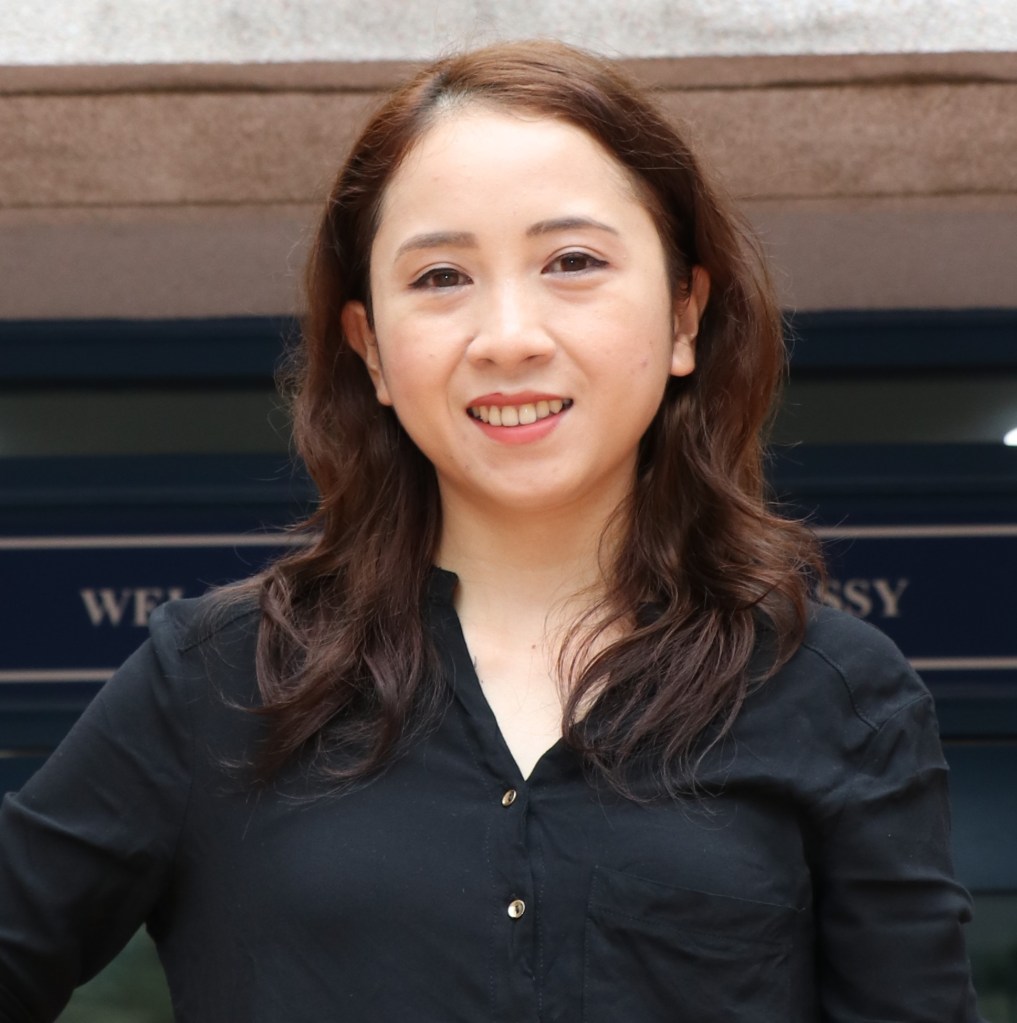
Auzellea is an English language teacher based in Sabah, Malaysia. She is a Fulbright TEA ’22 alumna. Her teaching interest is integrating ELT with citizenship education. As for her research interest, she is interested in exploring how public administration, politics, and public policy influence the education sector, directly or indirectly. She is currently doing her Master’s research degree in Administrative Science and Policy Studies.
 HIVE Educators | Cultivating teacher-scholars