Education is critical in forming the brains of future generations and preparing them to confront new problems. In today’s fast-paced environment, traditional teaching approaches are no longer appropriate for satisfying students’ needs (Sharmila, 2022). Educational innovation is critical for changing how knowledge is transmitted and received. Embracing innovation enables educators to create dynamic and engaging learning experiences that meet the different needs of their students. This article will look at the types of innovation in education that are suitable nowadays. In the twenty-first century, it is critical to adapt new educational methodologies to fulfil the needs of technologically literate students. (Wulansari et al., 2023). Innovative techniques can provide a more interactive and personalised learning environment that encourages creativity, critical thinking, and problem-solving abilities. Some of the types of innovation in education are:
- Technological Innovations
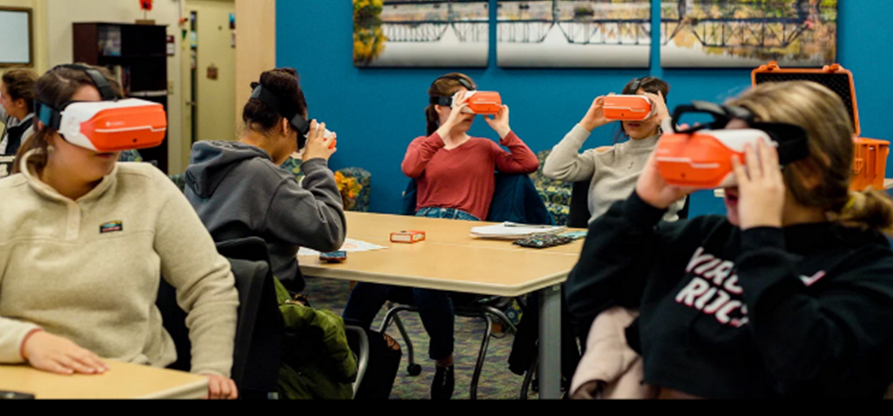
Technology has altered education by providing technologies such as interactive whiteboards, instructional apps, online learning platforms, and virtual reality simulations to increase student participation across all age groups. (Serdukov, 2017). Imagine a high school biology class where students used VR headsets to explore the human circulatory system in an immersive 3D environment. They can virtually travel through blood vessels, observe the flow of blood, and interact with different components of the circulatory system. This technology not only makes learning biology more engaging but also enhances students’ understanding of complex concepts. China, the USA, the U.A.E, and France are among the top countries investing in VR at the moment.
- Pedagogical innovations
Pedagogical improvements aim to update methods of providing knowledge to students by prioritizing student-centered teaching approaches, project-based learning, collaboration, and experiential learning opportunities (Moser & Medeiros, 2018). These innovations shift from memorizing to active engagement and have the potential to improve student recall and comprehension of difficult concepts. In an elementary school, students work on a collaborative project to design and build a sustainable garden on campus. Through this project, students not only learn about science, math, and environmental studies but also develop critical thinking, problem-solving, and teamwork skills. They actively engage in the learning process and see the real-world application of their knowledge. According to Sathappan, et al. (2021) in a case study in a Malaysian secondary school, PBL offers several benefits to students such as improved relationships, skill development, increased engagement, real-world practice and self-learning and learning by doing.
- Structural Innovations
Structural modifications entail redesigning the architectural and administrative features of educational institutions, including flexible learning environments (Alaeddine et al., 2015). These improvements include transdisciplinary curriculum development, competency-based evaluation, and collaborations with other organizations. These innovations promote a holistic approach to education by breaking down traditional divides and systems. Picture a newly redesigned middle school with movable furniture, adaptable classroom layouts, and collaborative workspaces. Students have the flexibility to choose where they want to learn based on their preferences and the requirements of the task at hand. This environment promotes active learning, creativity, and independence among students.
Telefonplan, Vittra’s newest school in Stockholm, Sweden had already done this. Rosan Bosch designed the Stockholm-area campus, which seems more like a creative environment than a school. Students can work freely on their computers while resting on one of the “sitting islands”. If students need to interact with their peers on a project, they can take advantage of facilities like “the village”—a miniature house for group work—or the more open “organic conversation furniture”. Jannie Jeppesen, the principal of Vittra Telefonplan, says on the school’s website that the design is designed to inspire “children’s curiosity and creativity” while also providing possibilities for collaborative and independent time. Vittra does not award traditional marks; instead, children are taught in level-based groups, thus maximizing different teaching and learning circumstances is a top emphasis. The campus’s openness and odd furniture arrangements reflect the school’s idea that “children play and learn based on their needs, curiosity, and inclination.” That is true for children all throughout the world, so let us hope that educators in other nations start to pay heed.


Educational innovation can profoundly revolutionize teaching and learning. Embracing creative ideas enables educators to design engaging, personalized learning experiences that better prepare students for success in the twenty-first century. Whether through technological improvements, changes in teaching methods, or structural reforms, innovation is the key to realising every learner’s full potential. Let us embrace educational innovation as a catalyst for positive change and a road to a better future for all.
References:
Alaeddine, N I., Parsaei, H R., Kakosimos, K., Guo, B., & Mansoor, B. (2015, July 8). Teaching Innovation with Technology to Accelerate Engineering Students’ Learning. https://doi.org/10.18260/p.24815
Daiyou, J. (2011, August 1). Classroom teaching strategies creative abilities. https://doi.org/10.1109/iccse.2011.6028760
Liu, R. (2015, June 1). How to Innovate: The Essential Guide for Fearless School Leaders. Harvard Educational Review, 85(2), 294-296. https://doi.org/10.17763/1943-5045-85.2.294a
Moser, A., & Medeiros, L F D. (2018, November 28). Toward a Smart Pedagogy: Devising a Methodology for Innovation. Springer eBooks, 179-190. https://doi.org/10.1007/978-3-030-01551-0_9
Serdyukov, P. (2017, April 3). Innovation in education: what works, what doesn’t, and what to do about it?. Journal of research in innovative teaching & learning, 10(1), 4-33. https://doi.org/10.1108/jrit-10-2016-0007
Sharmila, P. (2022, August 29). Innovations in Teaching – Learning in Higher Educational Institutions in the Current Scenario. IARS international research journal, 12(01). https://doi.org/10.51611/iars.irj.v12i01.2022.219
Wulansari, K., Irdawati., Razak, A., Chatri, M., & Fajrina, S. (2023, July 25). Development of E-Module with STEM Nuances to Improve Students’ Creative Thinking Skills. https://doi.org/10.29303/jppipa.v9i7.4417
Written by Yang Qammarina Mohd Toha

She is currently a tutorial teacher at Tuisyen Celik Jaya, and a PhD candidate at University Malaysia Terengganu.
*This piece is solely the personal opinion of the author and does not necessarily reflect HIVE Educator’s stance.
 HIVE Educators | Cultivating teacher-scholars