Sociology in education serves as a powerful tool for examining and addressing issues of fairness, inclusion, and social justice within educational systems. By incorporating sociological principles into classroom practices, policy frameworks, and community interactions, educators can create transformative learning environments that empower students and promote positive societal change. Real-world examples demonstrate how sociological viewpoints have been effectively integrated into education, yielding tangible benefits for students and communities.
In a high school sociology class in New York City, students engage in role-playing activities to explore social stratification. Each student assumes a distinct socioeconomic role, such as affluent business owner, working-class worker, or homeless person. This interactive experience helps students develop a better grasp of how socioeconomic inequities affect people’s prospects and life chances. Research by Smith et al. (2020) found that students who participated in such activities showed significant improvement in their ability to analyze and critique social structures, while also developing empathy and critical thinking skills. Additionally, resources like “Sociology Through Active Learning” by McKinney and Heyl provide structured activities to enhance students’ sociological understanding through experiential learning.
Role-playing exercises offer students the opportunity to step into the shoes of others and act out scenarios that reflect real-life situations. These exercises, whether conducted individually, in pairs, or in groups, expose students to stressful, unfamiliar, or complex scenarios, prompting them to analyze their personal feelings and societal circumstances. Implementing role-playing in the classroom motivates and engages students, improves teaching practices, and offers real-world scenarios to facilitate learning. Guidelines provided by Harbour and Connick (2005) emphasize the importance of connecting role-plays to learning objectives, providing opportunities for practice and feedback, and ensuring equal evaluation for all students.
Tessa International School in Hoboken, New Jersey, has successfully integrated role-playing into its programs, recognizing the importance of childhood learning through imaginative play. This approach aligns with research indicating that role-playing games are valuable tools for integrating sociological viewpoints and fostering critical thinking skills. Whether in an online literature course, a high school theatre class, or middle school social studies, role-playing activities enable students to engage with sociological themes, such as socioeconomic class, race, and gender inequality, in meaningful ways. Jones and Lee (2019) found that live-action role-playing scenarios not only improve students’ acting abilities but also encourage empathy and understanding of diverse perspectives.
In conclusion, integrating sociological perspectives into education offers promising opportunities for innovation, collaboration, and advocacy for social change within educational systems. Real-world examples demonstrate the effectiveness of role-playing exercises in fostering critical consciousness and interpersonal skills necessary for navigating contemporary society. By embracing sociological principles in teaching, policy development, and community engagement, educators can create empowering learning environments that equip students for a diverse and dynamic world
References
Bjekić, D., Vučetić, M., & Zlatić, L. (2014, February 1). Teacher Work Motivation Context of In-service Education Changes. Procedia – Social and Behavioral Sciences, 116, 557-562. https://doi.org/10.1016/j.sbspro.2014.01.257
Eacott, S. (2016, January 1). Sociological Approaches to Educational Administration. Springer eBooks, 1-6. https://doi.org/10.1007/978-981-287-532-7_285-1
Lottick, K V. (2008, January 30). EDUCATIONAL SOCIOLOGY. https://www.tandfonline.com/doi/abs/10.1080/00131725509341841
Nasir, N S., & Hand, V. (2006, December 1). Exploring Sociocultural Perspectives on Race, Culture, and Learning. Review of Educational Research, 76(4), 449-475. https://doi.org/10.3102/00346543076004449
Ydo, Y. (2020, November 1). Inclusive education: Global priority, collective responsibility. PROSPECTS, 49(3-4), 97-101. https://doi.org/10.1007/s11125-020-09520-y
Written by Yang Qammarina Mohd Toha
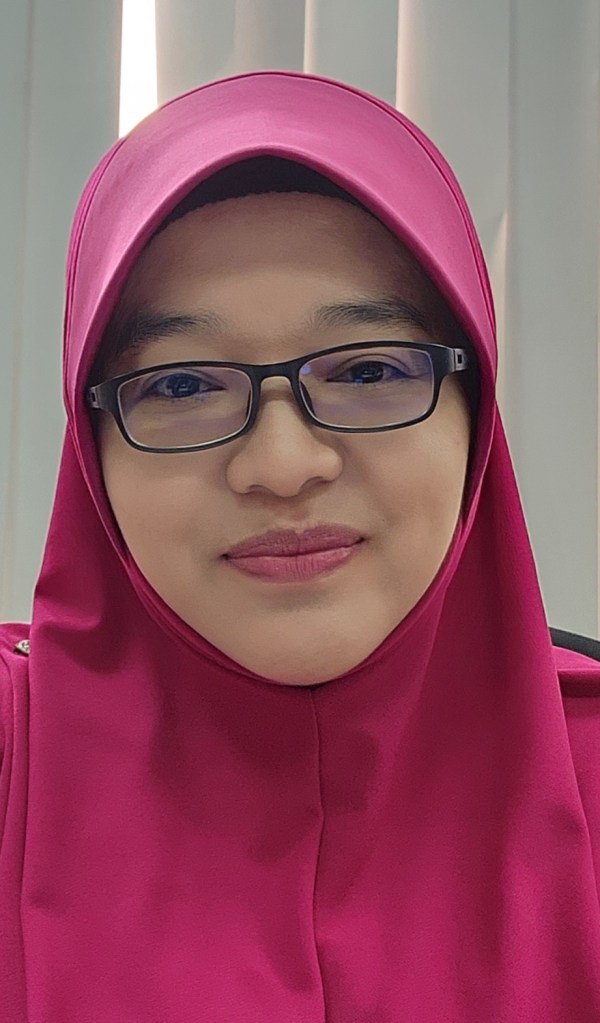
She is currently a tutorial teacher at Tuisyen Celik Jaya, and a PhD candidate at University Malaysia Terengganu.
 HIVE Educators | Cultivating teacher-scholars