In contemporary educational landscapes, the efficacy of classroom practices in fostering not only academic achievement but also holistic student development is essential. This article outlines a series of innovative and student-centred initiatives implemented to enrich the learning experience within an English language context. From leveraging familiar game mechanics to manage classroom behavior, such as the “UNO Card Strategy,” to facilitating profound cross-cultural understanding through a “Cultural Exchange Programme with Japan,” these practices collectively aim to transcend traditional pedagogical boundaries.
Furthermore, the integration of performing arts via “KLPAC Connect” served as a powerful therapeutic and expressive outlet, especially significant in the post-pandemic era, while “TFM Week Collaboration” connected theoretical learning with real-world professional applications, inspiring students to see English as a tangible “bridge to opportunity.”
Finally, the “Student Leadership Camp – Road Safety Project Campaign Awareness” immersed pupils in a Project-Based Learning framework, cultivating critical thinking, problem-solving, and leadership skills. Each initiative, meticulously designed and executed, underscores a commitment to fostering an engaging, supportive, and dynamic learning environment where English becomes a tool for personal growth, global understanding, and community engagement, ultimately shaping well-rounded and confident individuals ready to navigate an increasingly interconnected world.
Classroom Practice: Creative Classrooms (UNO Card Strategy)
The UNO card system was introduced as an innovative classroom behavior management tool. Drawing on students’ familiarity with game rules, it encouraged quick understanding and internalization of expectations. Positive actions were rewarded using “bonus” cards, while “Block” cards served as non-confrontational prompts for self-correction. Similar card-based strategies (Cox, 2025) and arts-integrated interventions (Catterall et al., 2023) have shown to promote engagement, self-regulation, and communication skills, turning routine discipline into an enjoyable learning experience.

Classroom Practice: Cultural Exchange Programme with Japan
Pupils participated in authentic communication with Japanese peers through simple notes enhancing both language skills and cultural awareness. This mirrors findings that intercultural exchanges improve linguistic competence, empathy, and reflective learning (Ikeda, 2020; Lockley & Yoshida, 2016). The “Let’s Exchange 2024: Culture Swap” platform demonstrated how technology can bridge distances and foster mutual respect, framing English as a real-world communication tool. Let’s Exchange 2024: Culture Swap

Classroom Practice: KLPAC Connect – Performing Arts
Theatre performance was used to provide a safe space for emotional expression, particularly post-pandemic. This approach aligns with evidence that arts-based learning strengthens empathy, collaboration, and communication (Lewandowska & Węziak-Białowolska, 2023). Techniques from expressive arts therapy also show positive effects on emotional literacy and confidence building (Verywell Mind, 2021). Simultaneously, pupils practiced speaking and listening skills in English, integrating emotional and linguistic growth.

Classroom Practice: TFM Week Collaboration
Professional is an Alumni from Teach for India engaged directly with pupils, connecting classroom learning to real-life applications of English. Research supports that authentic experiences increase engagement and motivation (Darling-Hammond et al., 2021; Lombardi, 2020). By observing English in professional contexts, pupils viewed it as a “bridge to opportunity,” increasing their sense of purpose and self-belief.

Classroom Practice: Student Leadership Camp – Road Safety Project
Within a Project-Based Learning (PBL) and Design Thinking framework, pupils addressed road safety, progressing through Feel, Imagine, Do, and Share stages. This mirrors studies showing such frameworks enhance problem-solving, leadership, and collaboration (Ng & Chu, 2021; Voogt et al., 2020). Their solutions led to selection for the BIIC 2025 innovation category, providing real-world relevance to their English communication skills. https://shorturl.at/RBywU

Outcomes:
Across these initiatives, pupils showed marked improvement in oral fluency, written expression, and willingness to participate in English. Initially shy learners became active contributors, benefiting from arts-based vocabulary reinforcement and real-world application activities.
Beyond academics, pupils developed a stronger emotional connection to English, seeing it as a tool for self-expression, empathy, and ambition. Cultural exchanges broadened global perspectives, performing arts built confidence, and leadership projects fostered community engagement. Participation and self-directed learning increased, with students taking greater ownership of their progress.
This multifaceted approach shows that innovation in teaching extends beyond technology to include relevance, relationships, and resilience, transforming English learning into a vehicle for personal growth and broader horizons.
References
Catterall, J., Hetland, L., & Winner, E. (2023). The effect of arts integration on social relationships. Education Sciences, 15(1), 14. https://doi.org/10.3390/educsci15010014
Cox, J. (2025, April 18). The Turn-A-Card behavior management plan. ThoughtCo. https://www.thoughtco.com/turn-a-card-behavior-management-plan-2081562
Darling-Hammond, L., Flook, L., Cook-Harvey, C., Barron, B., & Osher, D. (2021). Implications for educational practice of the science of learning and development. Applied Developmental Science, 25(2), 97–140. https://doi.org/10.1080/10888691.2018.1537791
Ikeda, R. (2020). Learning outcomes and self-perceived changes among Japanese university students studying English in the Philippines. TESL-EJ, 23(4), 1–16. https://tesl-ej.org/wordpress/issues/volume23/ej92/ej92a1/
Lewandowska, A., & Węziak-Białowolska, D. (2023). The effect of arts integration on social relationships. Education Sciences, 15(1), 14. https://doi.org/10.3390/educsci15010014
Lockley, T., & Yoshida, C. (2016). Language and culture exchange in foreign language learning: An experiment and recommendations. Innovation in Language Learning and Teaching, 10(3), 238–254. https://doi.org/10.1080/17501229.2014.960419
Lombardi, M. M. (2020). Authentic learning for the 21st century: An overview. Educause Learning Initiative. https://library.educause.edu/resources/2020/5/authentic-learning-for-the-21st-century-an-overview
Ng, W., & Chu, S. K. W. (2021). Engaging students in collaborative problem-solving through project-based learning: A case study in primary education. Asia Pacific Journal of Education, 41(1), 62–78. https://doi.org/10.1080/02188791.2020.1725433
Verywell Mind. (2021). What is expressive arts therapy? Verywell Mind. https://www.verywellmind.com/expressive-arts-therapy-definition-types-techniques-and-efficacy-5197564
Voogt, J., Erstad, O., Dede, C., & Mishra, P. (2020). Challenges to learning and schooling in the digital networked world of the 21st century. Journal of Computer Assisted Learning, 36(4), 409–421. https://doi.org/10.1111/jcal.12407
Written by Nusaibah bt Wan Fatul @ Wan Faisal
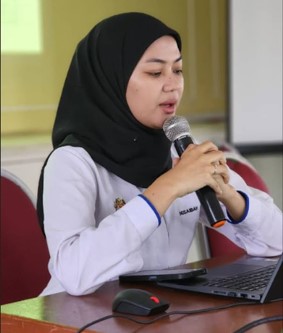
Nusaibah Bt Wan Fatul @ Wan Faisal is a teacher in Selangor possessing B.ed (HONS) TESL from UNISEL (2015) and M.ed in Special Education (Learning Disabilities) from UKM (2021). Currently a Teach for Malaysia (TFM) fellow under the program called Felo Guru Muda 2024 Kohort 1.
 HIVE Educators | Cultivating teacher-scholars