
In today’s rapidly evolving educational landscape, English language instruction must transcend traditional drills to prepare learners for effective global communication. The Hot Seat Challenge is an innovative classroom activity designed for MUET (Malaysian University English Test) learners to enhance their spontaneous speaking skills while integrating two vital 21st-century elements—digitalization and Sustainable Development Goals (SDGs). This approach not only builds students’ linguistic competence but also nurtures digital literacy and global citizenship, both essential competencies for pre-university learners preparing to enter a technology-driven and socially conscious world.
The Hot Seat Challenge aims to develop learners’ fluency, critical thinking, and reflective communication through dynamic speaking two-minute spontaneous response to a MUET Speaking prompt using relevant ideas and clear language, collaborate with peers to identify speaking gaps through WH-questions, apply digital tools for peer feedback and self-reflection, and engage with global issues through SDG-themed speaking tasks. These objectives align closely with the goals of MUET, which emphasizes the development of communicative competence, analytical thinking, and interactive engagement among pre-university learners.
Technology plays a central role in this speaking activity, reinforcing the integration of digitalization in English language teaching. Tools such as Google Forms, Padlet, and Flip (formerly Flipgrid) were used to collect peer feedback, record student responses, and encourage reflective learning. Timer apps were employed to manage speaking durations, ensuring fairness and consistency. Students collaborated on Padlet to post WH-questions and reflections, while Flip allowed them to record and review their performances critically. Through these tools, students not only practiced English speaking skills but also strengthened their digital competence. This digital integration echoes the Malaysian Education Blueprint’s emphasis on embedding technology in learning to enhance student engagement, autonomy, and lifelong learning habits.
The Hot Seat Challenge also incorporated Sustainable Development Goals (SDGs) to make communication practice more purposeful and globally relevant. The MUET-aligned speaking prompts were designed around key SDGs such as Good Health and Well-Being (SDG 3), Quality Education (SDG 4), Gender Equality (SDG 5), Climate Action (SDG 13), and Industry, Innovation, and Infrastructure (SDG 9). For example, students discussed statements like “The government should increase campaigns to promote mental health among youth” or “Digital transformation brings more harm than good to society.” These thought-provoking topics encouraged students to express informed opinions, consider diverse perspectives, and connect their classroom discussions to real-world challenges.
The 60–80-minute session was conducted in four structured stages. During the Set Induction, a short discussion and video introduced the SDGs to activate prior knowledge and stimulate curiosity. The Activity Instructions stage followed, where students were divided into small groups of four to five members and assigned an SDG-related MUET Speaking prompt. A “Hot Seat” was prepared in each group for the speaker, while other members acted as evaluators and questioners. The Main Activity involved each student taking a turn in the Hot Seat, delivering a two-minute spontaneous response followed by a three-minute WH-question session. Peer feedback was then collected digitally through Google Forms or manually via printed rubrics. In the final Reflection and Digital Review stage, students recorded or uploaded one of their responses on Flip or Padlet and reflected on their performance through guided questions about their learning process and digital experience.
Assessment during the Hot Seat Challenge was primarily formative, emphasizing peer and self-evaluation. The Peer Feedback Form, with a total of ten marks, guided students to focus on five key criteria—content relevance, idea development, fluency and coherence, language use, and response to WH-questions. This structure encouraged students to give targeted, constructive feedback and to recognize specific areas for improvement. Students also provided short written reflections highlighting one strength and one area to improve, reinforcing the habit of reflective learning and self-assessment.
The Hot Seat Challenge proved to be an engaging and transformative experience, particularly for Engineering students at Kolej Matrikulasi Kejuruteraan Kedah (KMKK). As future engineers, these students realized the importance of effective communication as a complement to technical expertise. The activity helped them articulate ideas clearly, respond confidently to questions, and develop the critical thinking skills necessary for professional presentations and discussions. The inclusion of digital tools added an innovative and interactive dimension that resonated with their digital learning habits, while exposure to SDG-related themes connected language learning to their discipline and the world at large.
Feedback from the participants showed a significant improvement in their confidence, fluency, and ability to organize ideas spontaneously. Many students expressed that the activity simulated real-life communication scenarios such as interviews or project briefings, where they needed to speak clearly under time pressure. They also appreciated the use of digital platforms, which made learning more enjoyable and relevant to the realities of modern communication. Through peer questioning, students learned to think on their feet, defend their viewpoints, and listen actively—skills that are equally essential in engineering teamwork and professional collaboration.
While the overall outcome was highly positive, several challenges were identified. Managing time efficiently during group rotations and ensuring stable internet connectivity for digital submissions posed occasional difficulties. To improve future implementations, it is recommended that digital forms be pre-loaded for offline use, short digital literacy briefings be given to first-time users, and the activity be extended into written follow-ups such as reflective essays or blog entries. These enhancements would strengthen the continuity between speaking, writing, and critical reflection.
In conclusion, the Hot Seat Challenge represents more than just a speaking task—it is a 21st-century learning experience that merges language proficiency, digital engagement, and global responsibility. By practicing spontaneous speaking on SDG themes using digital tools, MUET learners are not only improving their English fluency but also developing essential life skills for the future. For the Engineering students of KMKK, this activity highlighted how communication, technology, and sustainability are interwoven in shaping future-ready professionals. The experience was transformative, inspiring, and deeply relevant, demonstrating that meaningful learning happens when language education is connected to digital innovation and global awareness.
Written by J.D. Kumuthini Jagabalan
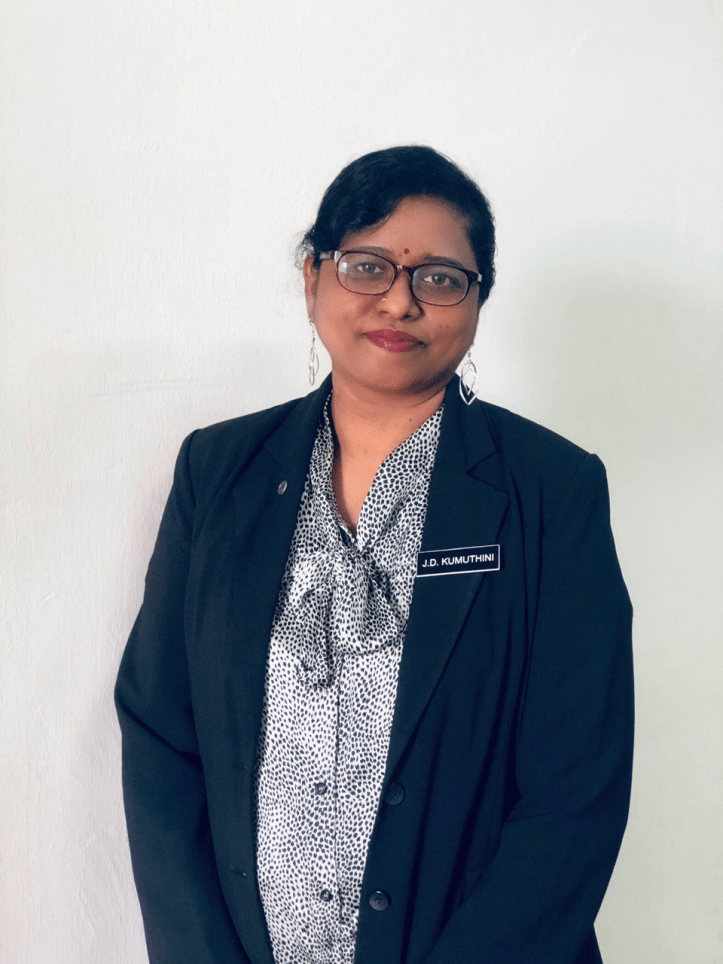
Madam J.D. Kumuthini Jagabalan is an English lecturer at Kolej Matrikulasi Kejuruteraan Kedah. She is passionate about teaching and guiding students in developing their language proficiency, communication skills, and confidence. With a strong commitment to education and continuous learning, she actively contributes to academic programs, student activities, and research in English language teaching.
 HIVE Educators | Cultivating teacher-scholars