Diabetes rarely begins with drama. It develops quietly in the background of ordinary life, in busy workshops in Penampang, and in rural areas like Kampung Buayan and Terian where every clinic visit requires planning, transport money, and time away from work. Many patients feel well for years, unaware that metabolic damage is progressing silently.
Across Malaysia, the National Health and Morbidity Survey (NHMS) 2023 reported that 15.6% of adults have known diabetes, with additional undiagnosed cases pushing the true burden even higher. In Sabah, this strain is reflected in everyday clinic registers. At Penampang Health Clinic alone, more than 2900 active patients are diagnosed with Type 2 diabetes. Each figure represents a person balancing work, family, culture, and online health information. In this reality, the Diabetes Educator (DE) is not a supplementary presence. The role is central to sustaining safe, informed, and continuous chronic disease care. From my experience in primary care, crisis rarely begins in the emergency department. It begins in missed follow ups, unsupervised medication adjustments, and the belief that feeling well means being well.
The Diabetes Educator as Clinical Translator
The Clinical Practice Guidelines (CPG) issued by the Ministry of Health Malaysia (MOH) provide clear algorithms for glycaemic control, medication adjustment, annual foot assessment, eye screening, and cardiovascular risk reduction. However, written protocols alone do not change daily habits. The Diabetes Educator carries these recommendations beyond the consultation room and turns them into practical routines that patients can follow at home.
The educator clarifies that a fasting glucose of 7.0 mmol/L already meets the diagnostic threshold for diabetes and that waiting for late symptoms such as numbness, blurred vision, or poor wound healing often means that complications have already begun. Complex physiology is translated into relatable terms. Insulin resistance becomes a key that no longer fits its lock. Persistent hyperglycaemia may be compared to a slow rising river that appears calm while gradually eroding its banks. This act of translation is not only clinical. It requires sensitivity to culture, language, belief systems, and daily realities, ensuring that medical advice is both scientifically accurate and genuinely workable in the patient’s own environment. In my daily consultations, I have found that patients rarely struggle with intelligence. They struggle with interpretation. Once medical language becomes relatable, adherence improves not because of fear, but because of understanding.
Core Domains of the Diabetes Educator’s Role
| Domain | Practical Responsibilities | Impact on Patient Outcomes |
| Structured Self-Management Education | Glucometer training, glucose log interpretation, insulin injection technique, medication timing education | Improved HbA1c control, reduced acute destabilisation |
| Risk Stratification and Safety Counselling | Pre Ramadan assessment, hypoglycaemia education, medication adjustment reinforcement | Reduced severe hypoglycaemia and hyperglycaemia events |
| NCD Integration | Blood pressure counselling, lipid control education, and diet counselling and weight management support. | Reduced cardiovascular risk burden |
| Complication Prevention | Annual foot risk assessment, neuropathy education, footwear advice, eye screening reminders | Lower amputation and vision loss risk |
| Behavioural Change Support | Motivational interviewing, addressing denial, goal setting | Sustained adherence and follow up continuity |
| Health Education | Addressing social media myths, herbal supplement claims, unsafe insulin discontinuation | Prevention of relapse into poor control |
| Community Engagement | Group sessions, family inclusion, outreach talks in kampung and workplace settings | Broader population level awareness |
Table 1. Core domains of the Diabetes Educator’s Role
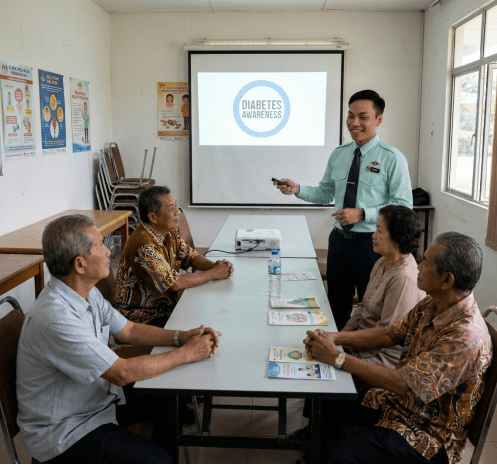
Figure 1. Health education to patient with diabetes
Ramadan as a Case Study in Diabetes Educator Leadership
Ramadan illustrates clearly why diabetes education must be proactive rather than reactive. More than 150 million Muslims with diabetes fast each year. Without structured preparation, the risk of hypoglycaemia and hyperglycaemia increases. The Diabetes Educator plays a critical role before the month begins, conducting pre fasting risk assessments, guiding individualised medication timing adjustments, explaining safe glucose thresholds, reinforcing that finger prick testing does not invalidate fasting, and clarifying when breaking the fast is medically necessary to prevent harm.
In Sabah, where geographical distance and transport barriers may delay timely review, insufficient preparation can lead to preventable destabilisation. In one primary care reflection, a patient from Donggongon, Penampang fasted with confidence because he felt physically well, only to later discover significantly elevated glucose levels during follow up. The pattern is familiar. The absence of symptoms does not guarantee metabolic control. Feeling normal is not the same as being stable. Encounters like this reinforce a consistent lesson in practice. Preparation determines safety. Faith and physiology must be guided together, not separately.
Integrating Digital Health Without Losing Human Judgment
A new dimension has entered diabetes care. Patients increasingly consult social media, online forums, or AI platforms before seeking professional review. Some experiment with herbal products, alter medication doses, or delay appointments based on what they have read. They often return later with unstable glucose levels or preventable complications. In this setting, the Diabetes Educator must also function as a guide in digital literacy, helping patients separate credible medical guidance from anecdote, reinforcing evidence-based pharmacotherapy, clarifying the dangers of abruptly stopping insulin, and rebuilding trust after misinformation. Digital tools can support glucose tracking and monitoring, yet interpretation, risk assessment, and safe decision making remain clinical responsibilities grounded in professional judgment. Increasingly, part of my role involves unlearning before relearning. Correcting misinformation now consumes as much time as traditional counselling.
The Diabetes Educator and Health System Sustainability
Malaysia’s National Strategic Plan for Non-Communicable Diseases underscores the importance of strengthening primary care and structured patient education. Specialist services cannot absorb the growing diabetes burden. Effective diabetes education at clinic level reduces emergency admissions for severe hyperglycaemia and diabetic ketoacidosis, improves medication adherence, lowers rates of defaulted follow up, delays progression to dialysis dependent kidney failure, and reduces long term cardiovascular events. Through this role, expertise is decentralised into the community. In Sabah, where geography, transport, and socioeconomic factors influence access to care, decentralisation is essential to system stability rather than optional convenience. In a state where distance influences access and time off work carries financial cost, education delivered well at clinic level often prevents crises that would otherwise require hospital care.
Conclusion
Diabetes remains silent until complications surface. It advances through long working hours, missed appointments, and the assumption that absence of symptoms equals control. The Diabetes Educator stands at the intersection of scientific standards and daily living, translating national clinical guidance into sustainable habits that patients can realistically maintain. Within Sabah’s primary care setting, this role often determines whether chronic disease remains controlled or progresses into avoidable crisis. It is not peripheral. It forms a central pillar in non-communicable disease management.
Written By Kenny Edward Potilu

Kenny Edward Potilu is an Assistant Medical Officer and Diabetes Educator at Klinik Kesihatan Penampang, Sabah. He focuses on diabetes education, complication prevention, and strengthening patient self-management in primary care.
 HIVE Educators | Cultivating teacher-scholars