
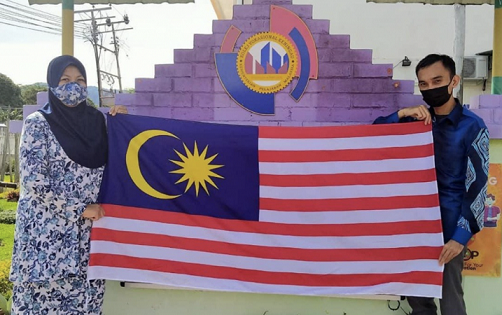
Project Dau Dau aims to encourage and cultivate the development of local arts and literature through English education among students. Developed by Dr Sirhajwan Idek and Nurazilah Othman in May 2021, the English-medium project combines three areas of arts, namely short story writing and poetry, performing arts such as dance and theater, as well as visual arts including painting and media.
Background

The project requires students to read, write and perform various types of literary work related to the indigenous cultures in Sabah, Malaysia, since it is the main theme. However, other universal themes are also allowed particularly the ongoing COVID 19 pandemic. This project started in 2018 where the students wrote their own stories related to their ethnic cultures such as Dusun and Bajau and orally presented these stories to their classmates. In 2019, we organized an English camp for young children where my students created their own storybooks and performed these stories to the children. Since 2020, we decided to get students with special needs to be actively involved in our project by having them perform stories and poems in virtual arts festivals and this includes sign language poetry performance by students with hearing impairment. In 2021, we decided to encourage our students to explore other themes that are more universal such as peace and pandemic in their writing. Some of our students’ works have been accepted for publication in literary magazines. Overall, our goal is to help students become writers in various types of literary works (e.g. short stories, flash fictions, poems, comics, songs, scripts and essays) and provide them platforms to showcase their works through performance, publication and sometimes, competitions. Although the focus might be literary arts, performing arts and visuals arts are also part of the project since the students need to perform their works and sometimes, complement their works through illustrations and photos.
Aim of the project
- To improve ESL learners’ English language proficiency through reading, writing, performing and listening to literary works particularly short stories and poems.
- To encourage the students to embrace their ethnic identities and gain better understanding of other ethnic groups through the cultural theme of the project that specifically emphasizes ethnic tales.
How do you know when the project aims are being fulfilled?
The main objective is to encourage students to write literary works of their own choices and themes, thus, the students’ written works are considered as the learning outcomes of this project. In order to provide the students with authentic purpose to write their pieces, their works will be submitted to literary magazines and websites to be considered for publication and they may choose to perform their works in art festivals (often pre-recorded videos for virtual art festival). Each student will be given a set of reflective questions in order to elicit their opinions about the activity.
The project involves students from various ethnic backgrounds as well as learners with special needs including those who communicate in sign language. Students write stories related to their respective cultural backgrounds and a series of storytelling session allows students to listen to each other’s stories. There is a technique that we have incorporated into our story writing style in which we insert words from their native languages such as Dusun and Bajau into the stories that are written in English language. The students will explain the meanings of these words in glossary and in their oral presentations. Learners with disabilities are also part of this project and some of them perform their poems through sign language. We record the students’ presentations and the video can be shown on social media for the public to watch. This ultimately allows people to listen to as well as read stories and poems about different cultures delivered by students who represent the community well through diversity and inclusivity. In our past activities, students of all racial backgrounds (Malay, Chinese, Indian, Dusun, Bajau, Murut, Iban etc.) wrote their pieces and performed them in the class.
It can improve ESL learners’ English language proficiency through reading, writing, performing and listening to literary works particularly short stories and poems. It will also encourage the students to embrace their ethnic identities and gain better understanding of other ethnic groups through the cultural theme of the project that specifically emphasizes ethnic tales. Since the students’ works will be presented, published or performed in public events, it might help the community to feel proud of their cultural heritage that is being preserved through arts and become more aware of how important arts are particularly literary arts. Another expected outcome is the development of writing and reading culture among the participants.
 HIVE Educators | Cultivating teacher-scholars