How It All Started
My name is Juliza binti Yusof, and I currently serve at Kolej Vokasional Sultan Abdul Samad (KVSAS), where I mainly teach English, in line with my Master’s degree in TESL from UKM. Over the years, I have also had the opportunity to teach subjects such as Core Abilities, Pendidikan Jasmani dan Kesihatan (PJK), Keusahawanan, and Kemahiran Komunikasi, stepping in wherever support was needed. For me, teaching has always been about being flexible and contributing wherever I can.
This reflective writing is part of my professional journey from Maker (DG10) towards Guide (DG12). Rather than presenting a formal report, I hope to share a personal story of teaching, learning, and growing through the experiences that shaped me along the way.
My teaching journey began in July 2010 at Kolej Vokasional Beaufort, Sabah, where I spent nearly a decade teaching SVM and DVM students. Beyond classroom teaching, I also became involved in co-curricular activities, including adjudicating English language competitions, umpiring netball, and participating in tournaments. Looking back, these early experiences quietly shaped who I became as an educator, reminding me that learning often happens far beyond classroom walls.
New Beginnings and Discovering Innovation
In 2020, I transferred to KVSAS, and while adjusting to a new environment, I slowly discovered a growing interest in educational innovation. In many ways, this interest had already started during my Master’s studies between 2017 and 2019. My thesis on creative drama in learning job interview skills was presented at i-CET Sarawak and later published in Creative Education (Yusof & Mohamad, 2018). Around the same period, I also explored innovation through a poster project titled Public ‘Skip’ping as an Alternative to Public Speaking, developed for InIIC 2018.
Interestingly, one of my earliest challenges at KVSAS was something very simple; trying to remember my students’ names. What initially felt like a personal struggle gradually became an action research project under Malaysian Action Research Network (MARNet). That experience later introduced me to creative presentation formats such as Photovoice and PechaKucha. I found it fascinating how structured formats like PechaKucha, with its 20 slides presented in 20 seconds each, could actually encourage concise and creative storytelling (PechaKucha, n.d.).
Learning to Slow Down and Rebalance
Because I maintained strong relationships with colleagues from Beaufort, I continued receiving invitations to judge English competitions, including debates, public speaking, and poetry recitation. I genuinely appreciated these opportunities, but by 2022, I slowly realized that saying “yes” to everything was becoming difficult to sustain. That period became an important reminder about balance, boundaries, and learning to care for my own well-being while remaining committed to professional growth.
In the same year, I was grateful to join the SEAMEO RELC Advanced Specialist Certificate in Language Assessment (14 May – 2 July 2022). Learning alongside educators from across Southeast Asia was both refreshing and inspiring. Beyond assessment practices, the programme reminded me that learning becomes richer when it is shared across cultures and experiences. Although AI tools can now help generate assessment materials more quickly, the course reinforced something equally important for me; understanding the principles behind good assessment remains essential.
Leadership, Service, and Learning Along the Way
From 2021 to 2025, I served as the treasurer of the college cooperative. Having no prior experience in cooperative management, I had to learn gradually through Institut Koperasi Malaysia (IKMa) compulsory courses. It was challenging at first, but over time, the experience built my confidence and eventually led to receiving the Best Cooperator Award in 2023. Today, I serve as an internal auditor while supporting and mentoring the incoming treasurer. Looking back, I have come to appreciate that leadership is not simply about completing responsibilities, but also about helping others grow into them.
At the same time, my innovation journey continued to develop. In 2023, together with student cooperative members, Anas Zahwan and Muhammad Izz Zahin, we explored how the CashBook application could be adapted for wider educational use. Rather than creating something entirely new, we used the SCAMPER framework to rethink how an existing tool might serve different users (Eberle, 1996). That experience taught me that meaningful innovation sometimes comes from seeing familiar things differently.
Sharing Experiences and Growing Together
Later that year, I conducted a departmental sharing session titled “Of Innovation, Publication, and SEAMEO.” My hope was simple — to reassure colleagues that innovation does not always need to be complicated or intimidating. Sometimes, it grows naturally from everyday teaching experiences.
It was genuinely encouraging to see several colleagues later participate in Festival of Teaching and Learning (FoTLi), with some even receiving awards for their efforts. Moments like these reminded me how valuable sharing and encouragement can be within a professional community.
My involvement with SEAMEO-related programmes, inspired by colleagues involved in SEAMEO RECSAM, also strengthened my appreciation for professional learning networks. It reminded me that educators rarely grow alone; we learn through conversations, collaboration, and shared experiences.
Innovating with Students as Partners
In 2024, joining the Guru KARISMA KPM programme gave me more structured exposure to Social Emotional Learning (SEL) and innovation integration (Arus Academy & Kementerian Pendidikan Malaysia, 2024). Throughout the programme, I worked closely with students to develop a digital self-care project using TinkerCAD. The first version, Safe eSpace for MH, earned a Silver Award at the National Occupational Safety and Health Innovation Competition. We later improved the project into Car3Craft, which received nominations for Most Local Impact and Most Creative Innovation at the Jacobs Teen Innovation Challenge. What mattered most to me was not the recognition itself, but the opportunity to learn, experiment, and grow together with students.
In 2025, my classroom innovation journey continued with cosmetology students, where we developed a game to simplify the Business Model Canvas. The project later received a Silver Award at FoTLi, reinforcing my belief that students learn best when they are actively involved in creating the learning process itself (Herman, 2024).
Paying Knowledge Forward
In 2026, I had the opportunity to serve as a trainer for a TESL Bootcamp at UNISEL, sharing SEL strategies with university students. Rather than seeing it as teaching alone, I experienced it as a meaningful exchange of ideas and reflection. Together with my friends from Program Guru KARISMA, we also digitized SEL materials taught and shared by Arus Academy using NotebookLM to support wider access and sharing. As Matheny (2022) suggests, knowledge in social-emotional learning becomes more meaningful when it is passed forward rather than kept to ourselves; a belief that resonates strongly with me today.
Looking Back
As I reflect on my journey, I realize that my growth has never been defined solely by awards or achievements, but by meaningful experiences, relationships, and continuous learning. Working alongside students remains one of the most fulfilling parts of my career, especially when ideas are built together rather than simply delivered. In those moments, teaching feels less like instruction and more like shared discovery. As education continues to evolve alongside AI, I believe values such as originality, ethics, and proper academic citation remain more important than ever.
My journey from Maker (DG10) towards Guide (DG12) continues with a hope to keep learning, sharing, and contributing meaningfully to the wider educational community, one experience at a time.
References
Arus Academy, & Kementerian Pendidikan Malaysia. (2024). Program Guru KARISMA: https://sites.google.com/arusacademy.org.my/program-guru-karisma-2024-2025/home
Eberle, B. (1996). SCAMPER: Games for imagination development. Prufrock Press.
Herman, S. (2024). Make Your Move Board Game Workshop at Keningau Vocational College.
Matheny, R. K. (2022). ExSELent teaching: Classroom strategies to support the social, emotional, and academic growth of students. Independently published.
PechaKucha. (n.d.). PechaKucha 20×20. https://www.pechakucha.com/
Yusof, J. B., & Mohamad, M. (2018). The effects of creative drama on job interview skills. Creative Education, 9(13), 2059–2069.
WRITTEN BY JULIZA BINTI YUSOF
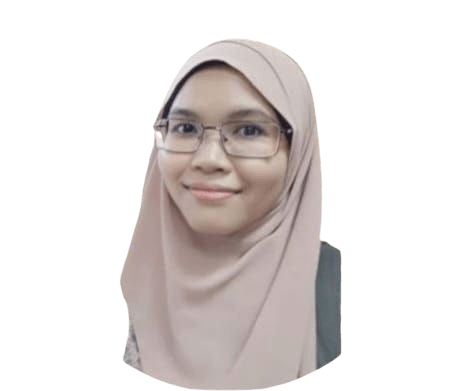
Juliza binti Yusof is an English teacher at Kolej Vokasional Sultan Abdul Samad (KVSAS). Currently, studying for her Master’s degree in TESL from UKM. Over the years, She also had the opportunity to teach subjects such as Core Abilities, Pendidikan Jasmani dan Kesihatan (PJK), Keusahawanan, and Kemahiran Komunikasi, stepping in wherever support was needed.

