
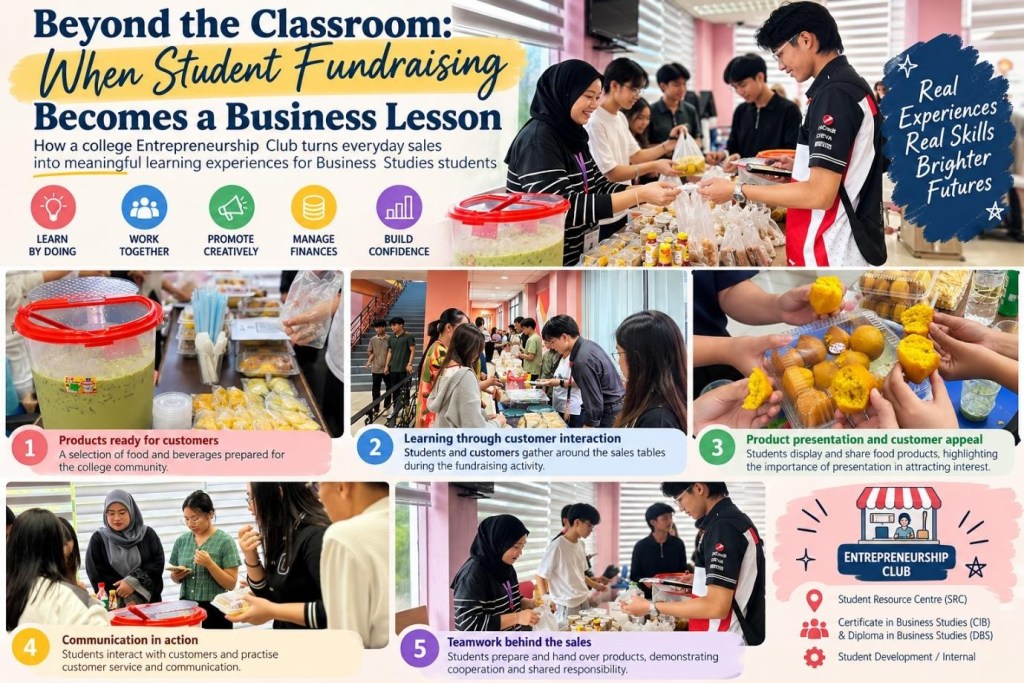
How a college Entrepreneurship Club turns everyday sales into meaningful learning experiences for Business Studies students
What if the classroom had no walls?
Imagine students learning about marketing in class one day and promoting their own products to customers the next. Instead of answering an examination question about pricing, they must decide how much to charge for a plate of fried rice. Instead of simply defining teamwork, they must work together to prepare products, serve customers and account for the money collected.These may seem like ordinary student activities, but they can provide valuable opportunities for learning.
At Cyberjaya College Kota Kinabalu (CCKK), the Entrepreneurship Club organises a monthly fundraising activity involving students from the Certificate in Business Studies (CIB) and Diploma in Business Studies (DBS) programmes. Held at the Student Resource Centre (SRC), the activity allows students to sell food and beverages to the college community while raising funds for club activities, outings and other student development programmes.
The products include mee goreng, fried rice, wantan, popiah, cakes, snacks and drinks. Behind each sale are decisions about product presentation, customer communication, teamwork, costs and financial records.
For educators, this activity raises an important question: How can an everyday student activity become a meaningful learning experience?
From textbook knowledge to real business decisions
Business concepts become more meaningful when students can see how they work in practice. In the classroom, students learn that marketing involves understanding customers and promoting products. During fundraising, they put this knowledge into action by presenting products, sharing information and responding to customer interest. Pricing also becomes more practical as students consider costs, selling prices and the amount that may remain after expenses.
Management is no longer just a definition in a textbook. It involves organising stock, dividing responsibilities and ensuring that the sales activity runs smoothly. This approach reflects experiential learning, in which students develop knowledge and skills through practical experience. A systematic literature review by Motta and Galina (2023) highlights the role of experiential learning in entrepreneurship education and the importance of learning by doing.
The aim is not to replace classroom teaching but to complement it. Lecturers can introduce relevant concepts before the activity and help students review their decisions afterwards. When students begin asking why one product attracts more customers than another, or why high sales do not always result in higher profit, they are moving beyond memorising definitions. They are learning to analyse situations, consider possible explanations and make informed decisions.
Teamwork is more than dividing tasks
CIB and DBS students work together in three sales groups, taking turns to conduct sales on Mondays, Wednesdays and Fridays according to the club’s schedule. The groups share responsibilities for arranging products, communicating with customers, handling sales and recording financial information. This gives students opportunities to practise cooperation, time management and accountability while working towards a common goal.
However, teamwork involves more than assigning tasks. It requires clear communication, reliability and mutual support. A sales session may become challenging when responsibilities are unclear or information is not shared. Students can learn that a team works better when members understand their roles and help one another. For lecturers, these moments are worth observing. A student who rarely speaks during a lecture may become more confident when explaining a product to a customer. Another who performs well in written assessments may discover that coordinating a team requires patience and flexibility.
These experiences remind us that students demonstrate their abilities in different ways. Practical activities can complement written assessments by providing additional opportunities to demonstrate communication, collaboration and problem-solving skills.
Selling in a digital world
The students promote their products through WhatsApp and social media, while also approaching lecturers and staff in person to introduce what is available. This combination of digital and face-to-face promotion gives students opportunities to practise different forms of communication. Online promotion requires clear messages, accurate product information and organised order-taking. Face-to-face selling encourages students to explain their products confidently and respond politely to questions.
These skills are relevant in Malaysia’s increasingly digital business environment. The Department of Statistics Malaysia (DOSM, 2025) reported that income from e-commerce transactions among Malaysian establishments reached RM1,288.1 billion in 2024, an increase of 8.8% from 2023. This national figure does not measure the impact of the college fundraising activity, but it illustrates the growing relevance of digital business practices.
The activity also gives lecturers opportunities to discuss practical questions. Which messages attract attention? Is the product information clear? Are orders recorded correctly? How should students respond when a product is unavailable?
After each sales session, students can reflect on customer responses and identify ways to improve their promotional efforts. Where records are available, they can compare online orders with direct purchases and use the findings to plan future activities. Familiar communication tools thus become part of the learning process, helping students understand how businesses interact with customers in everyday settings.
The lesson behind the money: Understanding profit and loss
One of the most valuable lessons from fundraising is financial responsibility. Students need to understand how money is used, how sales are recorded and how financial results are calculated. They must distinguish between capital, sales revenue, expenses, profit and loss. Revenue is the money received from sales, while profit is the amount remaining after relevant expenses are deducted. When expenses exceed revenue, the activity makes a loss.
Selling many products does not automatically mean making a large profit.
A group may sell most of its products but earn less than expected because its costs are too high. Another group may sell fewer items but manage its expenses more carefully. Without accurate records, students may struggle to explain these differences. Students can record purchases, sales, expenses and remaining stock, then review the results to identify possible improvements. They might adjust the quantities prepared, reduce waste or reconsider product prices.
The Club President monitors each group’s weekly financial performance, including income, capital, expenses, losses and profit. This review allows students to consider their progress towards the monthly fundraising goal. Financial information therefore becomes more than something to calculate for an examination. It becomes evidence that can guide decisions. The process also reinforces the importance of honesty, accurate record-keeping and responsible handling of funds.
Leadership begins with responsibility
The weekly financial review highlights the importance of leadership and accountability. The Club President monitors performance and coordinates the groups, but effective management depends on every member doing their part. When results fall below expectations, the discussion should focus on understanding what happened and what can be improved. Were too many products prepared? Were the prices appropriate? Did customers know what was available? Were expenses recorded completely?
These questions encourage students to investigate problems rather than immediately blame individuals. Lecturers and club advisers can model constructive feedback by encouraging students to explain their decisions, acknowledge mistakes and suggest solutions.
Research on extracurricular entrepreneurship education indicates that such activities can provide opportunities to develop entrepreneurial competencies and engage students beyond formal classroom instruction (Maragh, 2024). For educators, the challenge is to ensure that students do not simply complete tasks but also understand what they have learned from the experience.
Leadership, in this context, involves listening, taking responsibility and helping a team move forward.
Making reflection part of the activity
A practical activity does not automatically guarantee meaningful learning. Students may complete their tasks and raise funds without fully recognising what the experience has taught them.
Reflection helps turn experience into learning. Because the fundraising activity takes place regularly, students have opportunities to apply lessons from one session to the next.
After each session, lecturers or club advisers can guide a short discussion:
- What went well during the sales session?
- Which products attracted customers, and why?
- Were costs and stock managed effectively?
- What challenges did the team experience?
- What did students learn from their customers?
- What should be changed next time?
These questions do not require lengthy reports. A brief discussion, a simple sales summary or an individual reflection can help students connect their actions with their results. Lecturers can also ask students to link their observations to business concepts. Product presentation can be discussed in relation to marketing; task allocation can be linked to management; and expense records can be used to explore financial decision-making.
This creates a learning cycle in which students act, review, learn and improve. Motta and Galina (2023) identify experiential learning as an important approach in entrepreneurship education, supporting the value of practical activities when they are connected to learning and reflection.
What can educators learn from this practice?
The Entrepreneurship Club’s fundraising activity offers a practical reminder that meaningful learning does not always require an elaborate project or expensive resources. Sometimes, it begins with an everyday task that gives students genuine responsibility.
Educators who wish to introduce similar activities can consider four principles.
First, connect activities to learning outcomes. Explain which concepts and skills students will practise so they understand the educational purpose behind the task.
Second, provide responsibility with appropriate guidance. Allow students to make decisions about organising work, communicating with customers and reviewing results, while ensuring that lecturers and club advisers remain available to support them.
Third, assess the learning process, not only the final result. The group that raises the most money may not necessarily demonstrate the strongest teamwork, planning or reflection. Students should also be encouraged to explain their decisions and what they have learned.
Finally, create opportunities for improvement. Feedback is most useful when students can apply it to the next activity. Regular reflection helps them identify what worked, what did not and what they can do differently.
Carpenter and Wilson (2022), in their systematic review of entrepreneurship education in higher education, found evidence supporting experiential and extracurricular approaches while also noting limitations in the research base. This is a useful reminder for educators: practical activities offer promising learning opportunities, but their effectiveness should not simply be assumed. Clear objectives, appropriate guidance and thoughtful evaluation remain important.
More than fundraising
The funds raised support the Entrepreneurship Club’s planned activities, including outings and other student development programmes. Working towards this shared purpose helps students see how individual contributions can benefit a wider group.
The activity also introduces students to responsible business practices. Fair pricing, clear product information, safe food handling, respectful customer service and transparent financial records are important considerations in any business setting.
These habits are relevant whether students eventually establish their own businesses, join an organisation or pursue careers in other fields.
Student development can take place through ordinary moments: explaining a product, resolving a disagreement, checking a sales record or deciding how to improve the next session. With guidance and reflection, these experiences can contribute to students’ confidence, judgement and sense of responsibility.
Learning that continues beyond the stall
At Cyberjaya College Kota Kinabalu, the Entrepreneurship Club fundraising activity gives CIB and DBS students a practical setting in which to explore business concepts, work with others and take responsibility for real tasks.
Its value lies not only in the products sold or the funds collected, but also in the decisions students make along the way. They practise communicating with customers, managing expenses, reviewing financial results and reflecting on their performance.
For educators, the lesson is simple: teaching does not end when students leave the classroom, and learning does not begin only when they open a textbook. When practical activities are supported by clear learning goals, thoughtful guidance and regular reflection, everyday experiences can become valuable opportunities for development. Sometimes, students learn marketing by making a sale, teamwork by helping a colleague, and accountability by balancing the day’s records. Sometimes, the most meaningful business lesson begins at a small fundraising stall.
References
Carpenter, A., & Wilson, R. (2022). A systematic review looking at the effect of entrepreneurship education on higher education student. The International Journal of Management Education, 20(2), Article 100541. https://doi.org/10.1016/j.ijme.2021.100541
Department of Statistics Malaysia. (2025). Usage of ICT and e-commerce by establishment 2025. https://www.dosm.gov.my/portal-main/release-content/usage-of-ict-and-e-commerce-by-establishment2025
Maragh, D. (2024). A systematic literature review of the impact of extracurricular entrepreneurship education. Entrepreneurship Education and Pedagogy, 8(1), 40–59. https://doi.org/10.1177/25151274241247829
Motta, V. F., & Galina, S. V. R. (2023). Experiential learning in entrepreneurship education: A systematic literature review. Teaching and Teacher Education, 121, Article 103919. https://doi.org/10.1016/j.tate.2022.103919
Photo Gallery: Learning Through Entrepreneurship Club Fundraising
Photographs from the recurring fundraising activity at the Student Resource Centre (SRC), Cyberjaya College Kota Kinabalu, Sabah.

Photo 1. Bringing the college community together. Students and customers gather around the fundraising display, creating opportunities for interaction and customer service.

Photo 2. Products ready for customers. A closer look at the products and packaging highlights the importance of presentation in attracting customer interest.
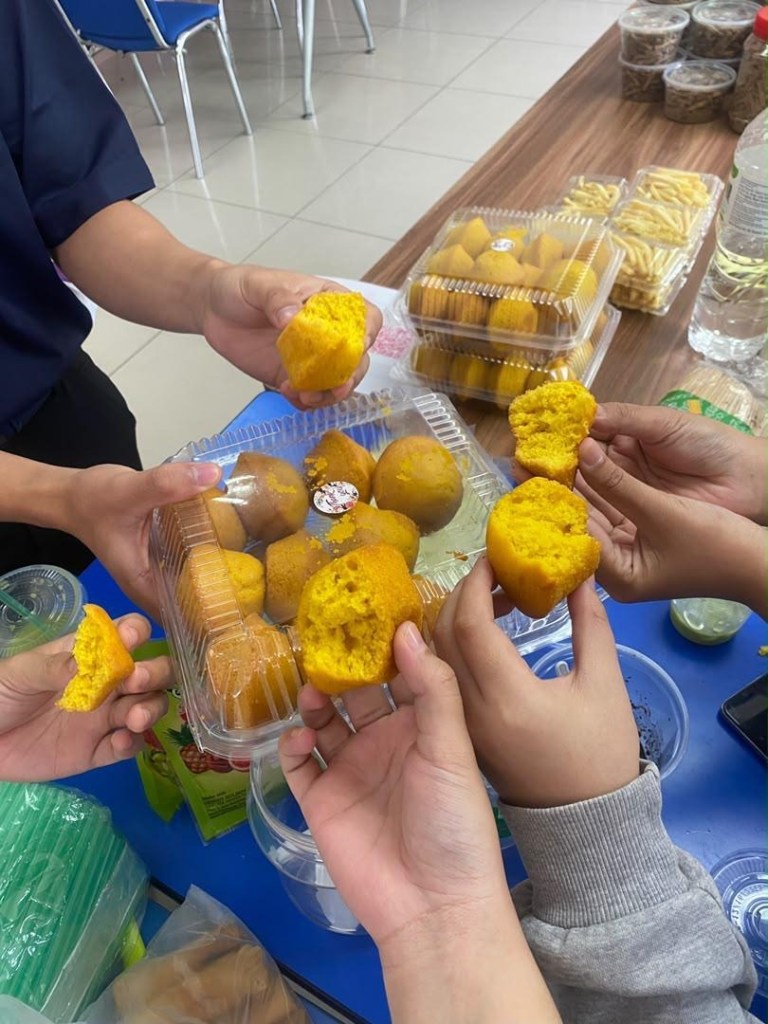
Photo 3. Learning through service. Students prepare and serve refreshments while practising coordination, communication and responsibility.
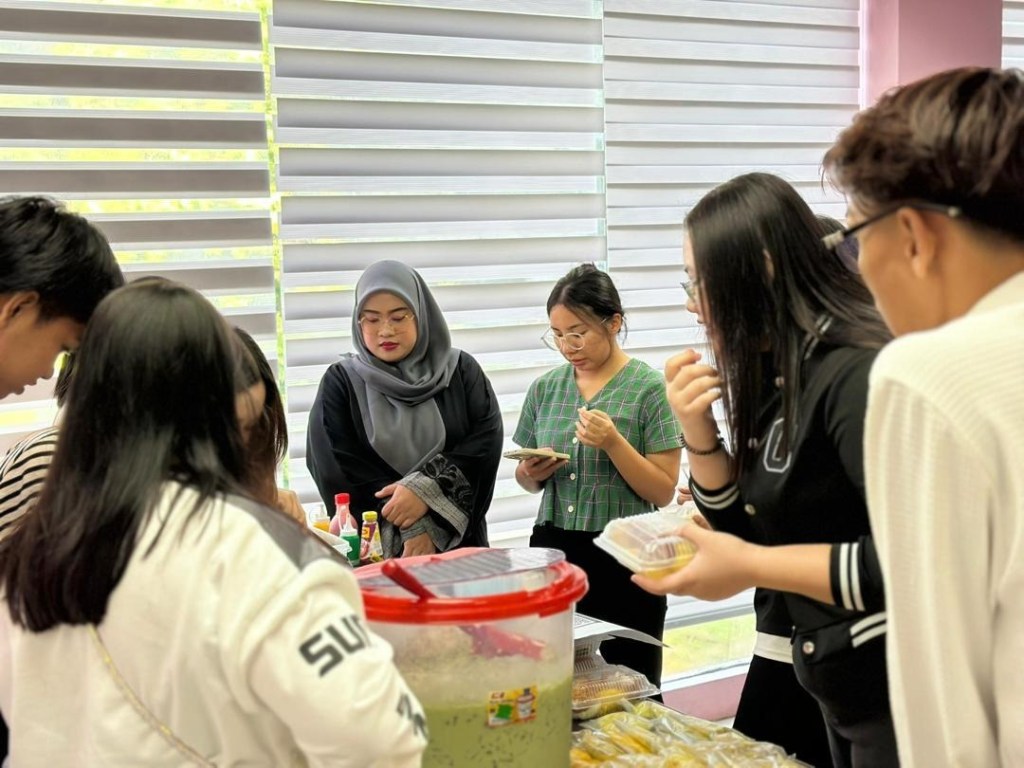
Photo 4. Communication in action. Students engage with customers and practise explaining products in a friendly and professional manner.
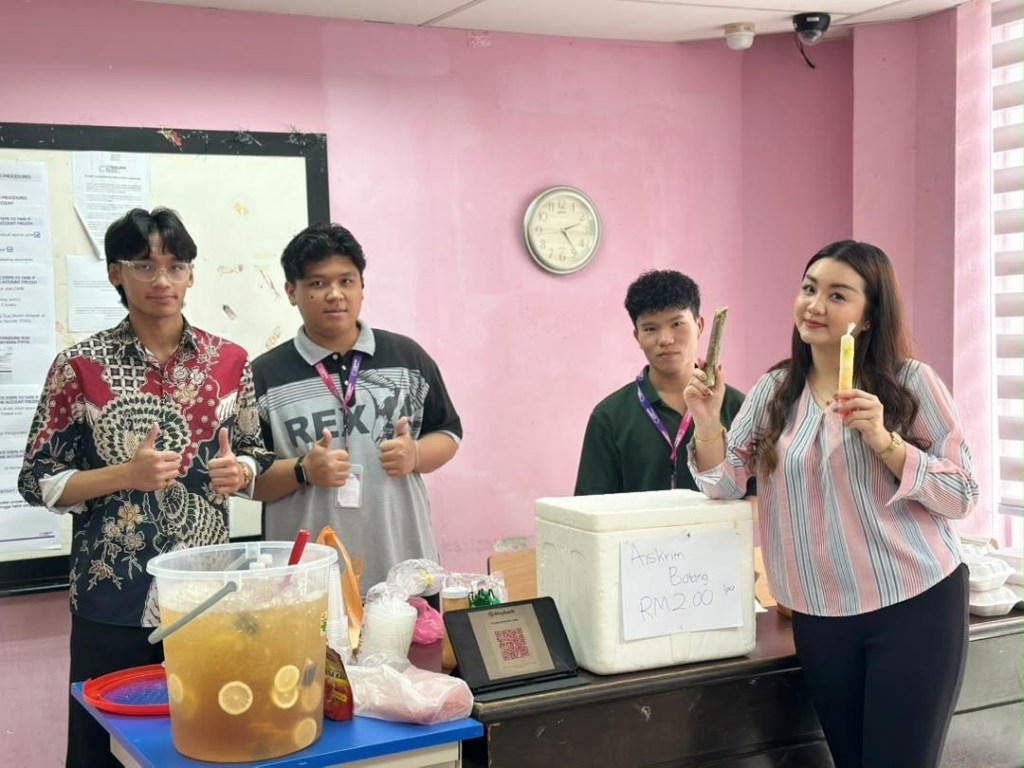
Photo 5. Presenting products with confidence. Student organisers introduce their products while gaining practical experience in selling and promotion
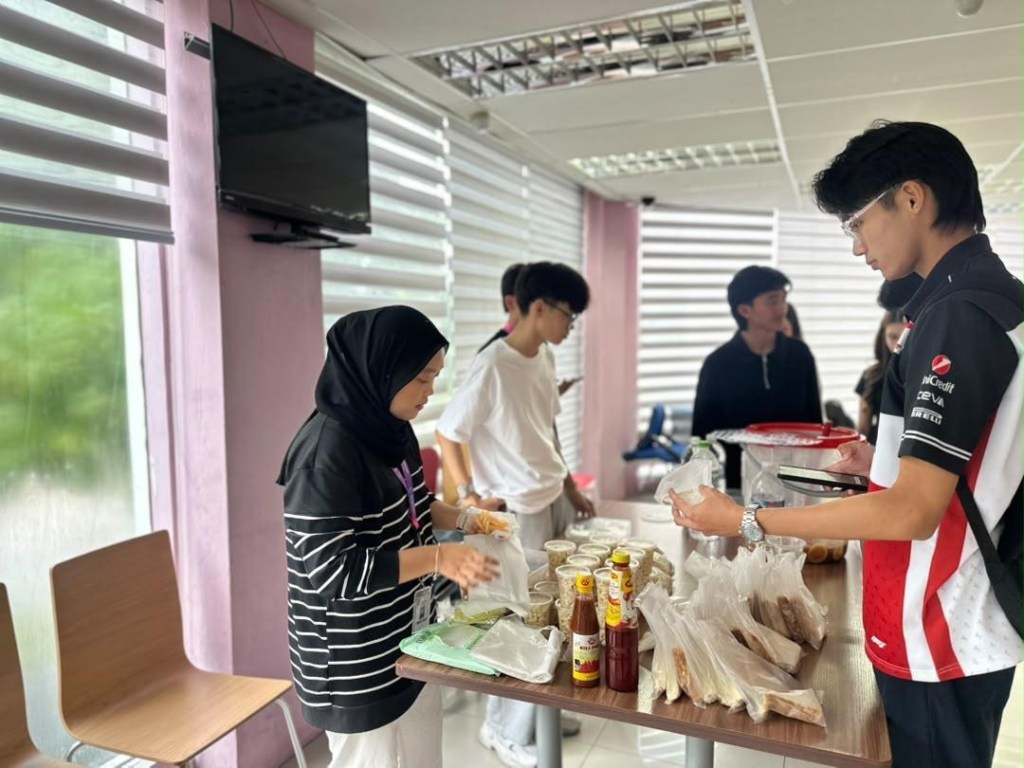
Photo 6. Teamwork behind the stall. Students organise the display and assist customers, showing how shared responsibilities support the activity.
Written by Mary K Grace Orow

Mary Grace K. Orow is a Business Studies lecturer and Programme Coordinator for the Business Studies programme, with over 13 years of industry experience across the banking, retail, and airline sectors. Throughout her career, she has been involved in customer relationship management, financial advisory, and digital banking operations. She draws on these professional experiences to enrich her teaching, bridging academic concepts with real-world business practice and helping students develop practical skills for their future careers.
Her teaching and research interests include digital transformation, financial literacy, entrepreneurship, and emerging business technologies. She is committed to equipping students with practical knowledge, critical thinking skills, and an ethical perspective to help them navigate the evolving demands of today’s business environment.

